

Nigeria has risen four places to eighth in the latest Bloomberg Economics Investment Risk-O-Meter, emerging as Africa’s biggest climber as economic reforms under President Bola Tinubu improved the country’s relative attractiveness to investors.
The ranking, contained in Bloomberg’s latest “An Investor’s Guide to Africa,” assessed the relative investability of 19 African economies.
Nigeria overtook Rwanda, Tanzania, Kenya and Namibia after recording stronger performances in three of the five indicators measured by the index: economic strength, fiscal strength and external vulnerability.
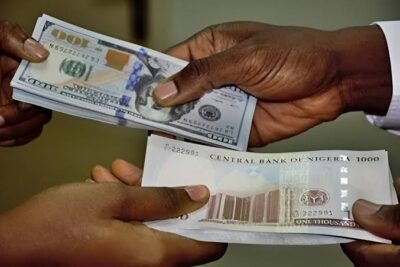
Bloomberg said the improvement reflected the impact of reforms implemented by the Tinubu administration, including the removal of the petrol subsidy, foreign exchange reforms and changes to electricity tariffs.
Mauritius retained the top position as Africa’s most investable market, while South Africa, which led the previous ranking, dropped one place amid a weaker economic growth outlook. Botswana also fell two places.
Nigeria’s improved ranking comes despite persistent concerns over inflation, the cost of living, infrastructure deficits, foreign exchange pressures and rising public debt.
The country’s economy has recorded stronger growth since Tinubu assumed office in May 2023. Real Gross Domestic Product growth rose from 2.54 per cent in the third quarter of 2023 to 3.46 per cent in the fourth quarter.
The economy grew by an average of 3.19 per cent in 2024 before accelerating to 3.85 per cent in 2025, its strongest annual performance within the period covered by the assessment. Growth stood at 3.89 per cent in the first quarter of 2026.
The Federal Government has defended its reforms as necessary to correct economic distortions, strengthen public finances, improve foreign exchange market transparency and attract investment.
However, the measures have also triggered significant adjustment costs for households and businesses, particularly through higher fuel, transport, food and electricity prices.
Meanwhile, Nigeria’s public debt has increased substantially since the beginning of the Tinubu administration.
Data from the Debt Management Office (DMO) showed that total public debt rose from N87.38tn as of June 30, 2023, to N159.28tn by December 31, 2025, an increase of N71.90tn, or 82.3 per cent.
The DMO attributed the increase to new borrowing, foreign exchange adjustments and the securitisation of certain legacy obligations.
Nigeria’s rise in the Bloomberg ranking nevertheless signals an improvement in its relative standing among African investment destinations, although investors are expected to continue monitoring the sustainability of the reforms, the country’s debt burden and its growth outlook.