
The Nigerian Communications Commission (NCC) has identified telecommunications and digital infrastructure as critical drivers of Nigeria’s ambition to build a $1 trillion economy by 2030.
Industry executives and policymakers made the submission at the Nigeria Digital Connectivity Investment Forum organised by the NCC in Abuja, where stakeholders examined the opportunities and challenges confronting investment in the country’s digital infrastructure sector.
Participants said expanded broadband coverage, improved digital connectivity and investment in emerging technologies would be essential to unlocking productivity and supporting economic growth, while calling for measures to strengthen investor confidence and attract more foreign direct investment (FDI).
The stakeholders also identified high energy costs, inadequate infrastructure and fragmented regulatory requirements across states as some of the major obstacles to sustained investment in the sector.
The panelists noted that Nigeria’s youthful population provides a significant advantage for the digital economy, with the country’s median age estimated at between 18 and 19 years. They said the growing young, digitally active population was contributing to rising demand for data and digital services.
The Chief Technical Officer of MTN, Yahaya Ibrahim, said Nigeria was moving beyond the conventional digital economy towards what he described as an “intelligent economy”, driven by artificial intelligence and advanced digital services.
Speaking from the perspective of mobile network operators, the Chief Executive Officer of Airtel Nigeria, Dinesh Balsingh, said the company had invested nearly $3.3 billion in expanding its network in Nigeria since its inception.
Balsingh commended the NCC for its advocacy for the reduction of Right-of-Way (RoW) charges, noting that more than 13 states had either eliminated the fees or reduced them to the federal benchmark of N145 per metre.
He, however, identified energy supply as a major challenge to network expansion, saying direct connection to the national grid remained unreliable.
He said telecom operators were therefore deploying solar-hybrid systems and high-capacity battery storage at off-grid sites, while also entering into off-take agreements with mini-grid and independent power producers to secure cleaner and more affordable energy.
The Chief Operating Officer of Spectranet, Sumit Gambhir, who spoke on behalf of smaller operators and Internet Service Providers (ISPs), said high middle-mile transit and energy costs were placing significant pressure on businesses without the financial scale of major mobile network operators.
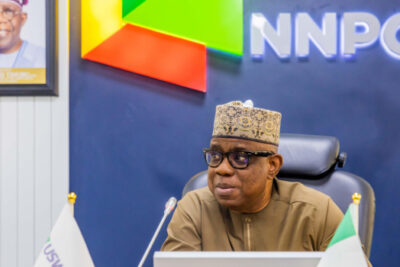
Earlier, the Executive Vice Chairman of NCC, Dr Aminu Maida, said the forum was particularly significant as Nigeria marks 25 years of GSM services.
Maida said the evolution of the telecommunications sector demonstrated the impact of bold policy reforms, transparent licensing and sustained investment in transforming communications in the country.
The NCC boss also called for stronger investor confidence and increased investment to bridge Nigeria’s digital infrastructure gap and create the foundation for broader economic growth.