

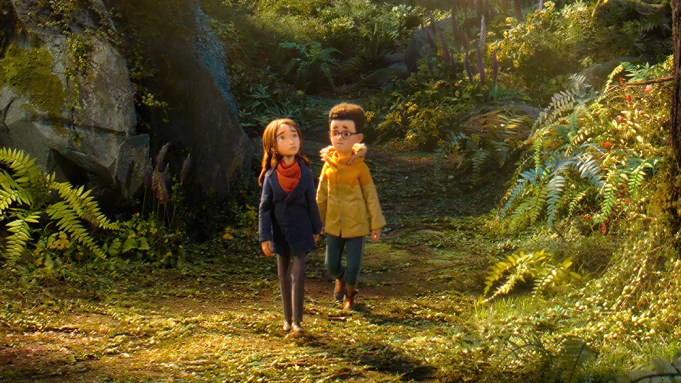
Stop-motion animation took centre stage at the 70th London Film Festival as Wildwood, the highly anticipated feature from acclaimed animation studio Laika, premiered before audiences recently.
The film’s world premiere highlighted the enduring appeal of a painstaking animation technique in an entertainment industry increasingly dominated by computer-generated imagery (CGI) and emerging artificial intelligence technologies.
Laika, known for acclaimed productions such as Coraline and Kubo and the Two Strings, has built a reputation for combining intricate physical craftsmanship with imaginative storytelling, making Wildwood one of the festival’s notable attractions.
The premiere formed part of the 2026 London Film Festival, which runs from October 7 to 18, showcasing 251 titles from 88 countries across film, television and immersive experiences.
However, Wildwood’s premiere offers a particularly compelling opportunity to examine the place of traditional animation in a rapidly changing film industry.
Unlike CGI, which creates animated imagery digitally, stop-motion involves manipulating physical puppets, models and sets, capturing individual frames and combining them to produce the illusion of movement.
The process demands considerable time, precision and artistic skill, with even a brief sequence potentially requiring hundreds of carefully arranged movements and individual frames.
This labour-intensive approach stands in contrast to the increasingly sophisticated digital tools available to major studios, raising questions about how audiences value craftsmanship in an era of technological innovation.
No doubt, Laica faces some challenges. And these challenges are not only about how to preserve the distinctive qualities of stop-motion but also to demonstrate that such productions can compete for attention in a marketplace dominated by established franchises and big-budget digital spectacles.
The reception of Wildwood, therefore, could offer an indication of the continuing appetite for animation that places physical artistry at the heart of its storytelling.
As the London Film Festival continues through October 18, the film’s premiere reinforces the importance of preserving diverse creative approaches within an industry constantly reshaped by new technology.