
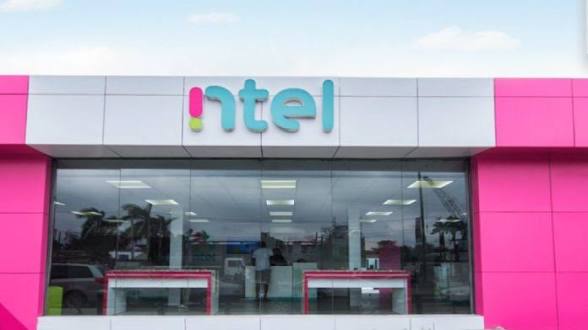
Nigeria’s telecommunications operator, NTEL, has introduced new connectivity services targeting international travellers, households and businesses as it seeks to rebuild its presence in the country’s competitive telecoms market.
The company, operated by NatCom Development and Investment Limited, is expanding beyond traditional mobile telecommunications with the launch of WakaGo, a global eSIM service, and AirFibre, a fixed wireless broadband solution.
NatCom acquired the assets of the defunct Nigerian Telecommunications Limited (NITEL) and is now repositioning the business around digital connectivity, telecommunications infrastructure and real estate.
WakaGo is designed to provide internet access to Nigerians travelling abroad through electronic SIM technology, allowing users with compatible devices to connect to mobile data networks without purchasing physical SIM cards at their destinations.
The service offers an alternative to conventional international roaming, enabling travellers to access internet-based communication and other online services while abroad.
However, NTEL has yet to disclose detailed pricing information that would enable customers to compare WakaGo’s rates with those of competing international eSIM providers.
The company’s second offering, AirFibre, targets homes and businesses seeking broadband access without the need for extensive fibre-optic installations.
As the company stated, the wireless broadband service could deliver speeds of up to 1.2 gigabits per second per link.
Trials are currently underway in Lagos and Abuja, with expansion planned for Ibadan, Abia State and Benin City.
However, actual speeds and service quality will depend on network coverage, local conditions, equipment and the commercial packages offered to customers.
The new services form part of NTEL’s broader growth strategy, which is built around its Beam, Eden and Titan (BET) agenda.
Under the framework, Beam focuses on connectivity and digital services, Eden covers real estate development, while Titan is dedicated to telecommunications infrastructure.
Through Titan, the company plans to develop and commercialise infrastructure assets, including telecommunications towers, fibre networks, ducts and colocation facilities.
Its real estate strategy, meanwhile, seeks to unlock value from its property portfolio through commercial and residential developments in Lagos, Port Harcourt and Abuja.
NTEL’s current strategy follows years of financial and operational difficulties that hampered its efforts to establish a strong position in Nigeria’s telecommunications market.

Before now, the company attempted to compete with established operators through its 4G LTE network but struggled to gain significant market share.
Its renewed focus, however, highlightsl a broader shift in the telecommunications industry, where operators are exploring additional revenue streams through enterprise connectivity, infrastructure sharing, data transmission and digital services.
Instead of focusing only on traditional mobile subscriptions, NTEL is seeking opportunities across multiple segments of the digital economy.
However, the company’s business strategy may face some execution challenges in a market where consumers and businesses expect reliable connectivity, competitive pricing and effective customer support.
For WakaGo, affordability and the availability of compatible devices will be important factors i attracting international travellers. AirFibre’s prospects will depend on network coverage, consistent speeds and pricing that can compete with existing broadband options.
NTEL is also exploring infrastructure-sharing arrangements, national roaming and satellite connectivity to extend its reach and support the delivery of digital services.
Such partnerships could help the company expand its coverage and improve service delivery without having to build every component of its network independently.