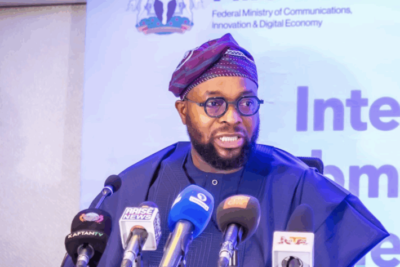

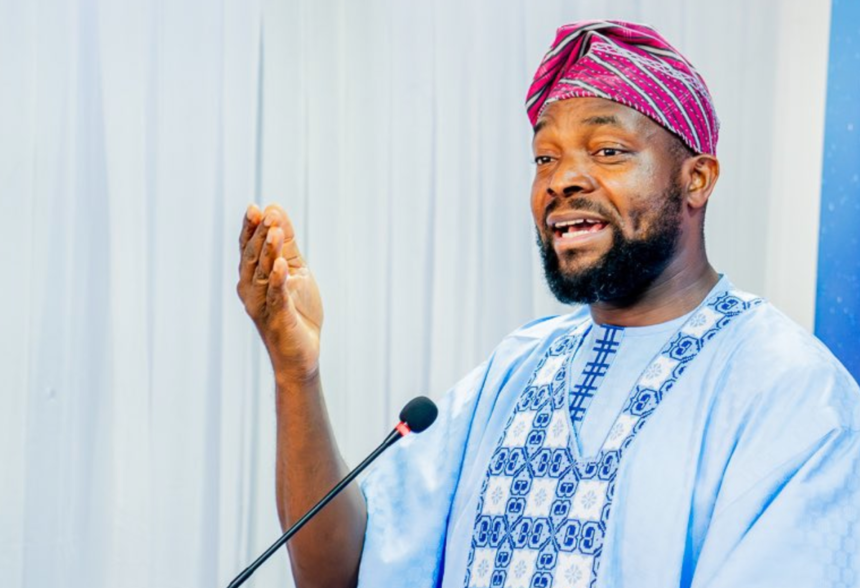
Nigeria’s Minister of Communications, Innovation and Digital Economy, Dr Bosun Tijani, and Ghana’s Minister for Communication, Digital Technology and Innovations, Samuel Nartey George, are among African leaders seeking to strengthen the continent’s influence in global telecommunications policy ahead of the International Telecommunication Union (ITU) elections.
The elections will take place during the ITU Plenipotentiary Conference scheduled for November 9 to 27, 2026, in Doha, Qatar, where member states will elect 48 countries to serve on the ITU Council for the 2027–2030 term.
Africa has 13 designated seats on the council, which oversees the implementation of the union’s policies between plenipotentiary conferences and helps shape the global telecommunications and digital technology landscape.
The outcome of the elections will have implications for Africa’s digital development, including broadband expansion, spectrum management, satellite communications, affordable internet access and the continent’s participation in setting international technology standards.
The ITU, a specialised agency of the United Nations, coordinates global telecommunications networks, radio-frequency spectrum and satellite orbits, while supporting the development of information and communication technologies worldwide.
African countries are intensifying efforts to secure representation on the council, with several seeking re-election and others entering the contest to expand their influence in international digital governance.
While South Africa and Rwanda are seeking to retain their positions, Nigeria and Uganda are also pursuing re-election. Côte d’Ivoire and Senegal are mobilising support to strengthen Francophone representation, alongside other incumbent countries, including Ghana, Kenya, Egypt, Algeria, Mauritius, Morocco, Tanzania and Tunisia.
New contenders include Gabon, Cabo Verde, the Democratic Republic of the Congo, Libya and Mali.
Tijani is expected to draw attention to Nigeria’s digital economy initiatives as the country seeks another term on the council.
A former technology entrepreneur and co-founder of Co-Creation Hub, Tijani has championed programmes aimed at developing Nigeria’s technology workforce, expanding broadband infrastructure and improving digital inclusion.
One of the major initiatives under his watch is the Three Million Technical Talent (3MTT) programme, which aims to train three million Nigerians in technology-related skills, including software engineering, data science and artificial intelligence.
Other initiatives include Project BRIDGE, which targets the deployment of 90,000 kilometres of fibre-optic infrastructure, alongside plans to expand rural telecommunications coverage through additional towers.
The initiatives form part of Nigeria’s broader strategy to improve connectivity, develop technical expertise and position the country to benefit from the global digital economy.
Ghana’s Nartey George is another prominent figure in the contest, with his policy priorities centred on strengthening Africa’s digital sovereignty and developing technology infrastructure that better serves the continent’s needs.
His agenda includes promoting homegrown technology ecosystems, improving digital infrastructure and supporting systems that facilitate cross-border trade and payments within Africa.

The Pan-African Payment and Settlement System (PAPSS), which enables cross-border payments using participating African currencies, is part of the wider drive to reduce barriers to intra-African trade and strengthen regional financial connectivity.
South Africa’s Minister of Communications and Digital Technologies, Solly Malatsi, is said to be making efforts to expand high-speed internet access, encourage competition in the telecommunications market and use public-private partnerships to close connectivity gaps.
Rwanda’s Minister of ICT and Innovation, Paula Ingabire, has championed the development of technology and innovation ecosystems, including Kigali Innovation City, which is designed to bring universities, technology companies and startup support facilities together.
Kenya’s Cabinet Secretary for Information, Communications and the Digital Economy, William Kabogo Gitau, is focused on public-sector digitalisation and the development of policies to guide the country’s adoption of artificial intelligence and emerging technologies.
Egypt’s Minister of Communications and Information Technology, Raafat Hindy, is advancing the country’s digital transformation agenda, including the expansion of online government services and investment in the information technology sector.
Algeria’s Minister of Post and Telecommunications, Sid Ali Zerrouki, is seeking improvements in fibre-optic connectivity, 5G development and high-speed internet infrastructure, alongside initiatives aimed at strengthening the country’s digital capabilities.
The competing priorities reflect the range of issues African governments want to advance through greater participation in global telecommunications decision-making.
Beyond the council elections, African candidates are also contesting key leadership positions within the ITU.
Zimbabwe’s Dr Cosmas Luckyson Zavazava is seeking election as director of the Telecommunication Development Bureau (BDT), which leads the union’s work supporting telecommunications development, particularly in developing countries.
The position is significant for African countries seeking international technical assistance, investment support and programmes to expand connectivity in underserved communities.
There is also competition for Africa’s three designated seats on the 12-member Radio Regulations Board (RRB).
Four candidates, including Dr Mohamed El-Moghazi of Egypt, Edmund Yirenkyi Fianko of Ghana, Basebi Mosinyi of Botswana and Sana Zairi of Morocco, are vying for the positions.
The board addresses disputes relating to the application of international radio regulations and oversees matters concerning the use of radio-frequency spectrum and satellite orbits.
Its decisions are important to African countries seeking to protect their interests in satellite communications, wireless networks and other spectrum-dependent technologies.
As the Doha conference approaches, African governments face the task of securing sufficient representation to influence decisions that will shape the future of global telecommunications.
For the continent, the stakes extend beyond winning seats. Effective representation could help advance priorities such as affordable data, rural broadband coverage, accessible digital devices and stronger participation in the development of international technology standards.
The elections will therefore provide an opportunity for African countries to push for global telecommunications policies that reflect their development needs and strengthen their position in the digital economy.