

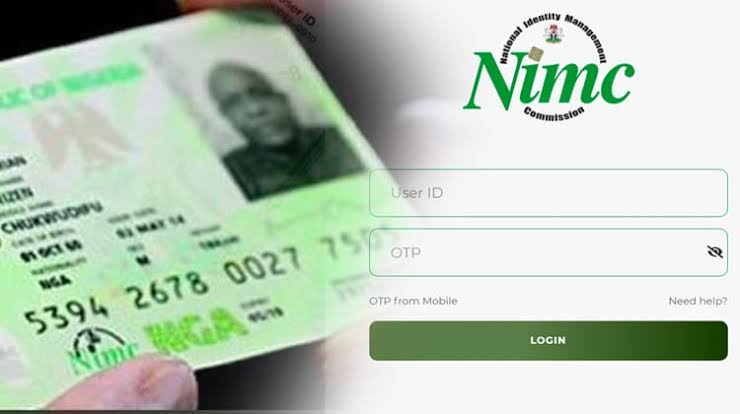
As part of efforts to combat fake addresses and strengthen the nation’s identity ecosystem, the National Identity Management Commission (NIMC) and the Nigerian Postal Service (NIPOST) have launched a new digital address verification system.
The initiative was announced on Friday in Abuja during a joint press conference on the implementation of the NIMC Act 2026 and other strategic collaborations.
Both agencies expressed confidence that the new system will integrate verified addresses with the National Identity Register, allowing Nigerians to authenticate their locations through a trusted digital platform.
It will further improve access to public and private sector services, they noted.
Speaking at the launch, Director-General and Chief Executive Officer of NIMC, Engr. Bisoye Coker-Odusote, said the collaboration would combine trusted identity with trusted location information to improve governance, financial inclusion, logistics, e-commerce and public service delivery.
According to her, while the National Identification Number (NIN) establishes who an individual is, the national postcode system being developed by NIPOST will establish where the particular individual can be reliably reached.
“This is why our collaboration with NIPOST is both timely and strategic. It will also strengthen planning, improve transparency, enhance beneficiary targeting and support more effective policy implementation across sectors,” she said.
Describing the collaboration as a game changer, Coker-Odusote said it would create a system of verified identities linked with verified addresses and locations, making it easier to detect false addresses submitted during identity verification processes.
She disclosed that work had already begun to integrate postcode retrieval into the NINAuth platform, enabling Nigerians to confirm their addresses and retrieve their postcodes through a single trusted platform.
Responding to concerns over how rural communities and informal settlements without conventional addresses would be captured, the NIMC boss explained that the initiative goes beyond traditional addressing.
According to her, it has assigned every standing structure in the country a unique Geographic Information System (GIS)-enabled, machine-readable location identifier.
“What we are building is a unique identifier for every single standing structure in Nigeria. We are leapfrogging the need for conventional addresses by giving every building a unique GIS-enabled, machine-readable location identifier,” she noted.
She added that the commission’s ongoing ward-level enrolment exercise would ensure Nigerians in remote communities were captured, while the partnership with NIPOST would provide accurate address verification for government agencies, financial institutions and businesses.
Coker-Odusote also announced that NIPOST had been licensed as one of NIMC’s enrolment partners, allowing Nigerians to enrol for the National Identification Number (NIN) through designated post offices nationwide.
On security, Coker-Odusote said the NIMC Act 2026 had strengthened the commission’s enforcement powers against identity fraud.
She added that while NIMC would collaborate with security agencies to arrest suspects, prosecutions would be handled by the Ministry of Justice.
Speaking earlier, the Postmaster General and Chief Executive Officer of NIPOST, Tola Oyeyemi, said the partnership marked a significant step towards building the foundational infrastructure required for Nigeria’s digital economy.
She emphasised that every modern economy depends on two critical capabilities, knowing who people are and knowing where they are.
How the Digital Address Verification Works
“Identity gives people access, while the postcode system provides service direction. When both work together, government can serve better, businesses can operate more efficiently and citizens can participate more fully in the economy,” she said.
Oyeyemi explained that the national postcode system would provide a framework for location intelligence, logistics, planning, emergency response and citizen access to services, adding that integrating it with the NIN would create a more connected and inclusive economy.
She also disclosed that the National Digital Postcode Project, conceived in 2006, had received full funding for the first time under the administration of President Bola Tinubu.
This initiative aligns with ongoing efforts to secure the nation’s database and identity networks, especially as Tinubu meets service chiefs to address security concerns. For verified status updates, visit the official NIMC Portal.