
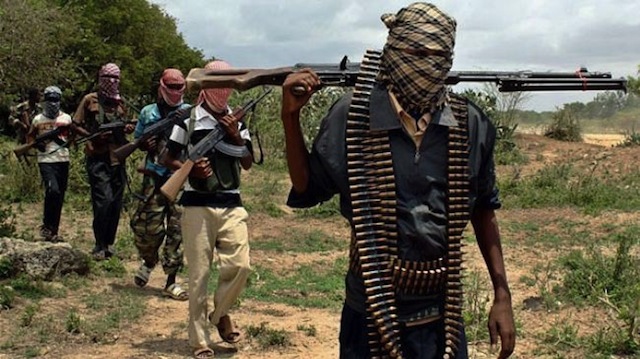
A new report reveals that Boko Haram uses AI platforms, including ChatGPT and Claude, to manufacture bombs and coordinate operations.
Former insurgents, according to a report by The New York Times, made the startling revelation.
The report noted that the deadly terror group members used multiple AI platforms, including ChatGPT, Claude, Gemini, Grok and DeepSeek.
According to the publication, former Boko Haram commanders told terrorism and technology researcher, Antonia Juelich of the University of Cambridge, that after an assault on a military base was frustrated by a defensive trench, the group consulted AI tools for ideas.
“That was when they learned how to modify motorcycles to jump over such obstacles,” the report stated.
“Their mechanics altered motorcycles for speed and acceleration, and fighters practised manoeuvres before operations,” it added
One of the former Boko Haram commanders was quoted as informing Juelich: “We saw in a movie how motorcycles can jump over bridges.
“We used AI to learn how to do this. We gave it information, like what motorcycles we use and the distance we need to jump and so on. And it gave us steps on what we have to do,” the unnamed commander revealed.
Another terrorist, a former commander in Islamic State West Africa Province, ISWAP, told Juelich, “You type in the question or use your voice, and it gives you a detailed answer, like ‘How can I build a bomb?,’ and then it tells you how.
“It is like a human robot! We used it a lot,” he remarked.
“Trial-and-error can kill you. AI gives you accuracy,” one member further said.
“Before, the bomb explosion was not that big, but then they studied it.
“AI told us what chemicals to put in that made the explosion heavier,” he said.
Reacting to the findings, OpenAI told The New York Times that the terrorists violated its policies with such actions.
On their part, Google and Anthropic said their AI models contain protections designed to refuse dangerous requests.

Security Concerns Over Boko Haram Uses of AI
However, the former insurgents told the researcher that they were often able to bypass chatbot restrictions by disguising their requests as legitimate projects.
Since its emergence in 2009, Boko Haram has caused significant devastation, killing tens of thousands and displacing over two million people.
Notwithstanding, the Nigerian military, bolstered by regional forces and international partnerships, has intensified counterterrorism operations, resulting in the neutralisation of top commanders, mass surrenders, and the rescue of numerous civilian hostages.
To learn more about national security efforts, read about how Tinubu meets service chiefs over Nigeria’s security challenges. For additional international coverage, view the full report on The New York Times.