

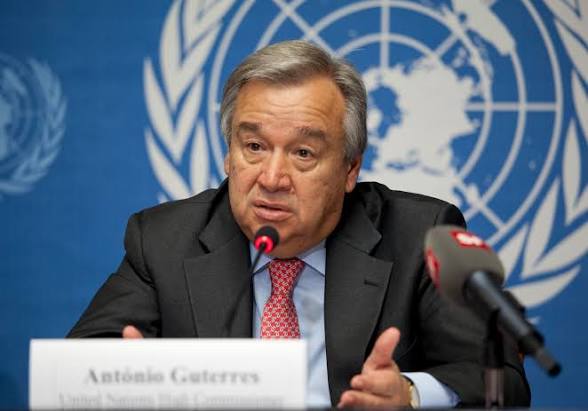
The United Nations Secretary-General, Antonio Guterres, has warned that the world is entering a new era of climate extremes, as rising global temperatures, melting glaciers and rising sea levels intensify the threat of extreme weather events.
Guterres issued the warning on Monday at the opening of the 2026 United Nations Climate Change Conference (COP31) in Antalya, Turkey, calling on world leaders to take urgent action to address the escalating climate crisis.
He said that the combination of an exceptionally strong El Niño weather phenomenon and human-induced global warming was exposing the planet to more severe climate-related threats.
“A supersized El Niño is colliding with a planet already superheated by man-made climate change,” Guterres said, adding that the world had entered “a new age of climate extremes.”
The UN chief called on governments to accelerate efforts to reduce greenhouse gas emissions, pursue a just transition away from fossil fuels and provide adequate climate financing and protection for vulnerable countries.
His warning came as the World Meteorological Organisation released a report showing that 2026 had continued a prolonged period of exceptionally high global temperatures, accompanied by accelerating ice loss and rising sea levels.
According to the agency, each of the past 12 years has ranked among the 12 hottest years ever recorded, with 2026 expected to be among the warmest years in history.
WMO Secretary-General, Celeste Saulo, described the latest climate indicators as alarming, warning that the exceptionally strong El Niño developing in the Pacific Ocean could intensify global heating and extreme weather conditions into 2027.
“What we are seeing gives new meaning to the phrase off the charts,” Saulo told reporters in Geneva.
She warned that the world should prepare for another potentially record-breaking year in 2027 as the effects of El Niño combine with the long-term warming trend.
The WMO said that the global average surface temperature between January and September 2026 was approximately 1.47 degrees Celsius above the pre-industrial average.
It added that the current El Niño could push temperatures higher before the end of the year.
El Niño is a naturally occurring climate phenomenon associated with the periodic warming of sea surface temperatures in the central and eastern tropical Pacific Ocean. It influences weather patterns across different parts of the world and can contribute to higher global temperatures.
Saulo said thatbsea surface temperatures in the Pacific were expected to rise significantly, with forecasts suggesting thatvthey could reach 3.8 degrees Celsius above average between now and January.
The agency’s preliminary data also placed 2026 among the four hottest years on record.

WMO climate information chief, John Kenned, said that uthe developing El Niño could push the year’s final temperature figures closer to the highest levels recorded.
Besides the rising temperatures, the report highlighted other disturbing climate indicators, including record-high global sea levels, declining freshwater resources and the continued retreat of glaciers.
It also disclosed that the annual loss of ice in 2025 was equivalent to filling five Olympic-sized swimming pools every second throughout the year.
Saulo warned that climate change was increasing the intensity of weather-related disasters, including heatwaves, tropical cyclones and heavy rainfall.
She stressed that the combination of human-induced global warming and El Niño was creating additional risks for communities already exposed to climate-related hazards.
“We are supercharging our weather and El Niño will be a risk multiplier,” she said.
However, the WMO identified progress in the development of early warning systems, reporting that the number of countries with essential multi-hazard early warning systems increased from 55 in 2015 to 136 in 2025.
The agency urged governments attending COP31 to strengthen investments in climate observation, data collection and weather forecasting to improve preparedness and protect vulnerable populations.
Saulo stressed that reliable climate information and effective forecasting systems were essential to reducing the human and economic consequences of extreme weather events.
“We cannot afford to fly blind,” she remarked.