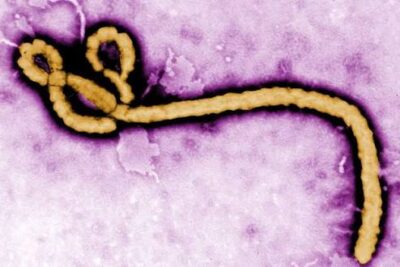

Nigeria recorded no additional confirmed Ebola case, 21 days after detecting an imported case of the Bundibugyo strain of the disease, the Nigeria Centre for Disease Control and Prevention (NCDC) has said.
The agency, however, disclosed that 28 contacts linked to the index case were still under monitoring, while 34 others had completed their mandatory 21-day follow-up as of November 9, 2026.
The NCDC Director-General, Dr Jide Idris, disclosed this in a national health security update issued on Tuesday, November 10, 2026, saying 62 contacts had been identified since Nigeria confirmed the imported case on October 20.
According to him, the index case involved a traveller from Uganda. He added that the agency, in collaboration with the Federal Ministry of Health and Social Welfare, the FCT Administration, state governments and development partners, had sustained surveillance, contact tracing, laboratory testing and infection prevention measures.
Idris explained that being identified as a contact did not mean that an individual had contracted Ebola, noting that the monitoring process was designed to detect symptoms early and ensure a prompt public health response.
He said the agency was also investigating reported alerts and maintaining heightened surveillance across the country to ensure that suspected cases were promptly identified and tested.
The NCDC boss urged healthcare workers in public and private facilities to remain vigilant, obtain travel and exposure histories from patients, observe appropriate infection prevention measures and immediately report suspected cases to public health authorities.
He advised anyone who developed symptoms following possible exposure to Ebola to avoid contact with others and call the NCDC toll-free line on 6232 for guidance before travelling to a health facility.
Beyond Ebola, Idris disclosed that Nigeria was also responding to outbreaks of dengue fever in Sokoto and Zamfara states, as well as Chikungunya in Sokoto.
He said the agency had deployed National Rapid Response Teams, including entomologists from the National Arbovirus Research Centre in Enugu, to support affected states with case identification, laboratory investigations, clinical preparedness, community engagement and mosquito control.
The NCDC Director-General warned Nigerians against assuming that every fever was malaria, explaining that dengue and Chikungunya could also cause fever, headaches, body pains and joint pains.
He urged anyone experiencing persistent fever, particularly when accompanied by a rash, vomiting or severe joint pains, to seek medical attention. He warned that severe abdominal pain, repeated vomiting, bleeding and difficulty breathing could indicate serious dengue complications requiring urgent care.
Idris also called on households to eliminate stagnant water, cover water containers, clear discarded tyres and adopt measures to protect themselves against mosquito bites, noting that mosquitoes responsible for transmitting the infections often bite during the day.
On cerebrospinal meningitis, he warned that the approaching dry season could increase the risk of infections in parts of the country’s meningitis belt.
He urged state governments to strengthen disease surveillance, diagnostic services, clinical preparedness and vaccination responses where necessary.

According to him, sudden fever accompanied by severe headache, neck stiffness, confusion or altered consciousness requires urgent medical attention.
The NCDC boss also identified diphtheria as a continuing public health threat, particularly among children who had missed routine immunisation.
He said the agency was supporting states with surveillance, laboratory diagnosis, case management and outbreak response, while urging parents and caregivers to verify their children’s vaccination status and seek guidance on missed doses.
Idris further warned that Nigeria was approaching the period when Lassa fever cases historically increase, urging state governments and health facilities to strengthen surveillance, testing, treatment readiness and infection prevention ahead of the seasonal peak.
He advised households to protect food from rodents, store food in covered containers and maintain clean surroundings, while urging people with persistent fever to seek medical attention early.
The NCDC Director-General also expressed concern over the potential public health risks associated with increased travel and mass gatherings during the forthcoming festive season.
He called on state governments, event organisers and healthcare providers to make basic medical services available at major gatherings, maintain hygiene and sanitation standards and establish clear arrangements for identifying and reporting suspected infectious diseases.
Travellers and participants at public events were also advised to avoid crowded gatherings when experiencing symptoms of infectious diseases and seek medical attention promptly.
Idris called on state governments to provide frontline health workers and emergency response teams with adequate funding, equipment, logistics and operational support to strengthen the country’s capacity to detect and respond to infectious disease threats.
He urged Nigerians to cooperate with public health authorities, ensure their children received routine vaccinations and avoid spreading unverified information about disease outbreaks.
He said Nigeria’s health security depended not only on responding to outbreaks but also on detecting threats early, preventing infections and strengthening preparedness across all levels of government.
“For guidance or to report a suspected case, contact the NCDC toll-free line on 6232, or your state public health authorities,” he said.