


Apple, global technology giant, has unveiled its biggest health and fitness overhaul yet, built around a new question its devices will now try to answer every morning: how much can your body actually take on today?
The Apple Watch Series 12 and Apple Watch Ultra 4 introduce a redesigned sensing system that Apple says delivers the most accurate heart rate tracking of any wearable on the market. Larger, more efficient optical sensors now check heart rate every five seconds around the clock, and heart rate variability — a marker doctors use to gauge stress and recovery — is measured as often as every five minutes, a 24-fold jump in frequency from before.
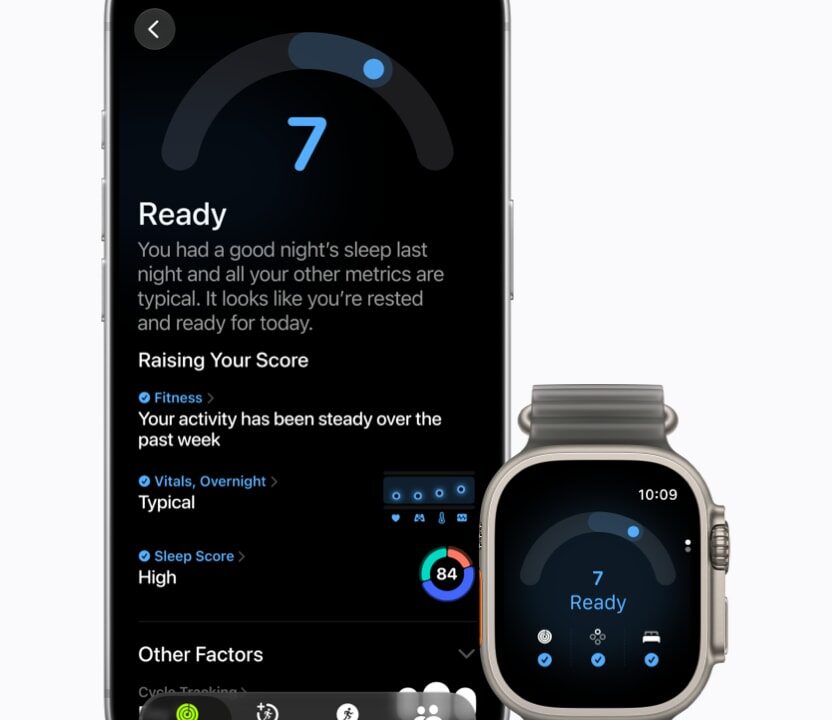
That stream of data feeds into “readiness,” a new daily score from 0 to 10 that translates a night’s sleep, a hard workout, or a rough week into a single recommendation: recover, pace yourself, get ready, or go for it. Apple says the score updates through the day as new information comes in, and it will show users exactly what’s driving the number rather than leaving them to guess. The company built the scoring model using its own long-running heart and movement study, working alongside exercise scientists and physicians.
Dr. Sumbul Desai, Apple’s vice president of Health and Fitness, framed the update as an attempt to make sense of the numbers rather than just collect them, saying the goal is to turn “complex biometric data into clear guidance.”
The hardware changes arrive alongside a rebuilt Health app on iPhone, expected later this year with iOS 27, that leans on Apple Intelligence to interpret the data rather than just display it. A new Insights tab will surface a running summary of a user’s heart, sleep, fitness and cycle-tracking data, plus personalized suggestions — the kind of nudge that might flag a string of late nights before it turns into a slump.
A second addition, the Longevity tab, takes a longer view as it introduces “Health Age,” which compares a user’s Apple Watch metrics, VO2 max, resting heart rate, sleep, HRV, against their chronological age, allowing users fold in lab results like A1c and LDL cholesterol for a fuller picture. Apple says the tab draws on data from iPhone, Apple Watch, AirPods, clinical records and third-party apps and devices, covering heart, sleep, mental wellbeing, movement, metabolic health, hearing and nutrition.
Movement itself is getting a similar treatment. Mobility has long been tied to independence and chronic disease risk, but assessing it properly has usually meant booking time with a physical therapist or exercise physiologist. Apple’s new at-home evaluations let users run that kind of assessment themselves, using an iPhone camera and Apple Watch to measure flexibility, strength, balance, movement mechanics and VO2 max, with real-time audio and visual feedback guiding them through it. Apple says the vision-based models behind the assessments were built with clinician input, and that the analysis happens entirely on the device as no video is recorded, stored or shared.
Apple is pitching accuracy as the foundation the rest is built on. It says a study of more than 1,000 participants across demographic groups found its new heart rate sensing outperformed other wearables on the market. This claim, as is the case with most Apple health announcements, may likely draw closer scrutiny from independent researchers once the devices are marketed.