

The Independent National Electoral Commission (INEC) has restated its allegiance to Nigeria’s Constitution and the electorate, declaring that it has no preferred candidate, favoured political party or institutional interest ahead of the 2027 general elections.
INEC Chairman, Prof. Joash Amupitan (SAN), made the declaration on Thursday in Lagos while delivering the keynote address at the 10th Annual Conference of the Guild of Corporate Online Publishers (GOCOP).
The conference, themed “2027 Elections: Trust, Transparency and Shared Responsibilities,” brought together online publishers, editors, civil society organisations, academics, election observers and other stakeholders to discuss the credibility and future of Nigeria’s electoral process.
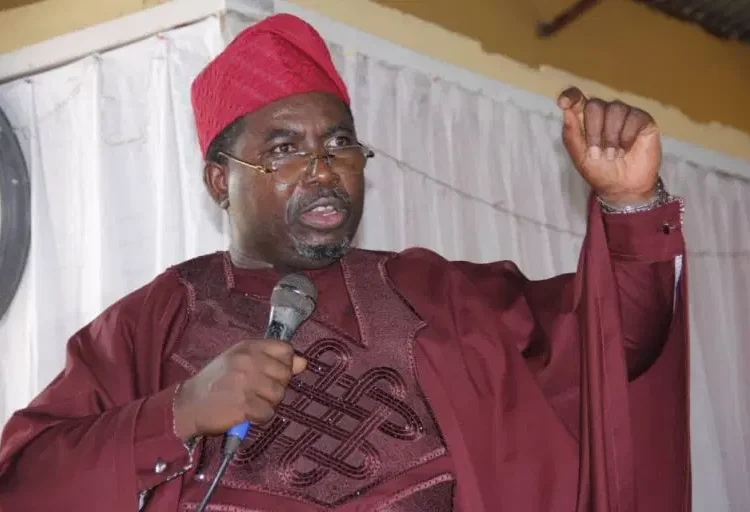
Amupitan, who was represented by the INEC Resident Electoral Commissioner in Lagos State, Prof. Ayobami Salami, assured that the electoral umpire under his leadership would remain neutral and committed to protecting what he described as the “sacred and uncoerced will” of Nigerian voters.
The INEC chairman said the credibility of the 2027 elections would depend not only on the Commission but also on the collective responsibility of political parties, the media, civil society, security agencies, voters and other democratic stakeholders.
According to him, electoral trust cannot be created through public relations campaigns or executive pronouncements but must be earned through consistent, verifiable and transparent execution of the electoral process.
He said the Commission had, over the past 14 months, undertaken structural, technological and logistical reforms to strengthen its preparedness for the 2027 general elections.
Amupitan noted that the Presidential and National Assembly elections are scheduled for January 16, 2027, while the Governorship and State Houses of Assembly elections would hold on February 6, 2027.
He said INEC had made substantial progress in implementing its statutory timetable, with its master election plan being coordinated across 23 headquarters departments and directorates, 36 state offices and the Federal Capital Territory, as well as 774 local government area offices covering more than 176,000 polling units nationwide.
The INEC chairman disclosed that the nation’s register of voters had reached a historic 103 million registered citizens following the conclusion of the three phases of the Continuous Voter Registration (CVR) exercise.
He said the three phases conducted between August 2025 and July 2026 recorded a combined 10,601,098 new registrations.
According to him, Phase One, conducted from August 25 to December 10, 2025, recorded 2,611,266 new voters; Phase Two, from January 5 to April 17, 2026, recorded 4,121,835; while Phase Three, conducted from May 11 to July 26, 2026, recorded 3,867,997.
He said the Commission had completed the public display of the Preliminary Register of Voters for claims and objections and was finalising the official register through data synchronisation and biometric checks to eliminate duplicate registrations.
Amupitan also announced that nationwide collection of newly printed Permanent Voter Cards (PVCs) would commence on Friday, October 9, 2026.
He urged online publishers to use their platforms to educate and mobilise registered voters to collect their cards at designated Local Government offices and Registration Area centres.

On technology, Amupitan said INEC had upgraded the Bimodal Voter Accreditation System (BVAS), including hardware optimisation, battery calibration and software improvements.
He said the Commission had also embarked on a nationwide audit of BVAS devices and procured additional units based on its deployment requirements.
The INEC chairman disclosed that the Commission had strengthened the electronic transmission and public visibility of polling-unit results through the enhanced eEC8A system.
He explained that the system would enable polling-unit result sheets to be digitised immediately after counting, cryptographically signed and transmitted to the public view portal.
According to him, the system is designed to enhance end-to-end result visibility and reduce opportunities for manual alteration at intermediate collation points.
He added that INEC had also deployed artificial intelligence-based auditing tools and multi-layered cyber-defence systems, in collaboration with global technology companies, to protect its databases against cyberattacks, unauthorised data injection and other threats.
Amupitan said the Commission had commenced early procurement and distribution of non-sensitive electoral materials to its state offices, with a view to ensuring sufficient time for inventory checks, batching and distribution to the 774 LGAs.
He also disclosed that the Commission had procured and begun distributing new operational pick-up vehicles to its state and local government offices to address transportation challenges, particularly in difficult terrains, riverine communities and remote border settlements.
He said an integrated operational framework had also been established to monitor the movement of electoral materials, storage security and vehicle deployment in real time.
The chairman further disclosed that INEC had conducted readiness assessments in the South-West and North-West geopolitical zones and was extending the exercise to the remaining zones.
He said the assessments were aimed at identifying operational gaps, checking logistics and storage facilities, reviewing voter-card distribution channels and strengthening emergency response mechanisms.
Amupitan reiterated the Commission’s commitment to neutrality, warning electoral officials against partisanship, administrative negligence and ethical breaches.
He said every INEC official was required under the Electoral Act 2026 to take an oath of loyalty and absolute neutrality.
He warned that officials found compromising the integrity of the electoral process would face dismissal and prosecution.
“To the voter in a local ward, INEC is not the Chairman in Abuja; INEC is you,” he quoted himself as telling field officials during a recent readiness assessment in Kaduna.
He also said the Commission had strengthened staff welfare through the implementation of the Consolidated Election Management Body Salary Structure (CEMBSS), alongside an increase in state-office operational overhead.
The INEC chairman identified misinformation, disinformation, fake news, political violence narratives and AI-generated deepfakes as major threats to the credibility of the 2027 elections.
He urged online publishers to resist clickbait journalism and ensure that election-related reports were properly verified before publication.
According to him, the speed of digital information must not take precedence over accuracy, warning that false reports published during elections could cause lasting damage to public confidence even when subsequently retracted.
He urged GOCOP members to provide context and seek official verification when reporting operational delays or incidents rather than prematurely portraying them as evidence of systemic electoral failure.
Amupitan proposed a three-point strategic partnership between INEC and GOCOP ahead of the 2027 elections.
The partnership, he said, would include dedicated digital fact-verification, rigorous editorial self-regulation by online publishers and a national voter-education partnership focused particularly on PVC collection.
He said INEC would provide channels for GOCOP journalists to verify field reports, security incidents and technical issues before publication.
He also called on GOCOP to sanction members who publish unverified polling-unit results, altered result sheets or incendiary speculative reports.
Meanwhile, Amupitan expressed condolences to GOCOP and the Nigerian media industry over the death of the Guild’s former president and publisher of The Eagle Online, Mr. Dotun Oladipo.
He described Oladipo as a patriot, refined media executive and champion of ethical online journalism who played a pioneering role in the development of GOCOP.
Amupitan said the late publisher was also one of INEC’s reliable media partners in communicating the Commission’s activities to the public.
He urged the media to honour Oladipo’s legacy by promoting ethical journalism, responsible publishing and credible information during the 2027 electoral cycle.
The INEC chairman said the ultimate success of the 2027 elections would not be measured solely by the scale of the Commission’s logistical deployment but by the transparency of the process, credibility of the results and the collective commitment of stakeholders to protecting the ballot.
He called on publishers, editors and other media leaders to work with INEC to build public confidence and ensure that the 2027 elections strengthen rather than undermine Nigeria’s democratic institutions.