
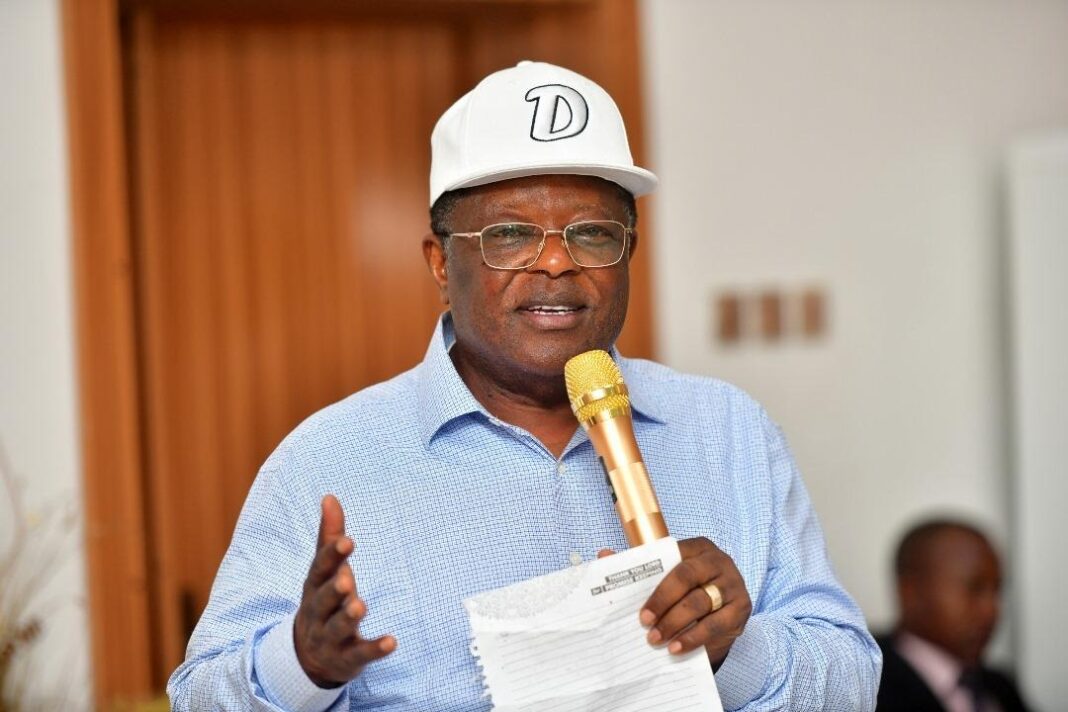
The Minister of Works, David Umahi, has reaffirmed that the Federal Government will proceed with both the Lagos-Calabar Coastal Highway and the reconstruction of the East-West Road, dismissing concerns that the latter would replace the controversial coastal project.
Umahi said President Bola Tinubu had directed that the 750-kilometre coastal highway, which traverses nine states, must be completed as originally planned.
He also disclosed that Tinubu was expected to commission Section One of the highway later this month or in early December.
The minister spoke on Sunday, November 22, during an inspection of bridges along Sections One and Two of the coastal highway.
His clarification follows weeks of uncertainty over the project’s alignment after he suggested in October that the Federal Government would divert parts of the proposed coastal route through the existing East-West Road.
In a statement issued on Monday by his Senior Special Assistant on Media, Francis Nwaze, Umahi described the coastal highway as a strategic national investment capable of attracting private capital, generating revenue and creating opportunities in tourism and industrial development.
He maintained that the reconstruction of the East-West Road was an additional infrastructure commitment rather than an alternative to the coastal highway.
“Nothing will happen to the 750-kilometre Lagos-Calabar Coastal Highway, which passes through the nine coastal states.

The President has directed that the project must be completed as envisaged,” the statement quoted him as saying.
The minister’s latest position follows his October 12 remarks that Tinubu had instructed the government to use the existing East-West Road instead of constructing a new alignment along parts of the coastal corridor.
At the time, Umahi quoted the President as saying, “Divert, do not do any new alignments.
Pass the coastal highway through the existing East-West Road.”
The comments generated controversy over whether the government intended to abandon or substantially alter the original coastal highway plan.
However, Umahi subsequently clarified that the project’s alignment remained intact, with the East-West Road reconstruction being treated as a separate commitment.
Speaking on Arise Television on October 23, the minister had expressed confidence that the entire 750-kilometre highway would be completed within three years, explaining that construction, procurement and engineering activities were being handled in phases.
He also acknowledged that a single comprehensive engineering design for the entire route was not yet available, stating that environmental assessments, soil investigations and detailed designs were being conducted section by section.
Construction of the coastal highway commenced in March 2024.
The project is designed to link Lagos, Ogun, Ondo, Edo, Delta, Bayelsa, Rivers, Akwa Ibom and Cross River states.
Defending its economic prospects, Umahi said the highway would incorporate concrete pavement, solar-powered infrastructure, tourism facilities, factories and CCTV surveillance.
According to him, the use of concrete and solar-powered facilities could enable the government to benefit from carbon credits, while commercial activities along the corridor would provide opportunities for investors to recover their investments.
He described the project as one of the administration’s major infrastructure commitments, alongside the 1,068-kilometre Sokoto-Badagry Road.
The minister also urged Nigerians, particularly South-East residents living in Lagos, to support the Tinubu administration, citing ongoing infrastructure projects in the region.
Meanwhile, the Federal Government has ordered a three-week nationwide emergency rehabilitation of major federal highways ahead of the Christmas and New Year festivities and the January 2027 elections.
Umahi said he had directed zonal directors, controllers, resident engineers and contractors to return to construction sites immediately to repair failed sections of federal roads and restore them to motorable conditions within the deadline.
The intervention covers major highways across the six geopolitical zones.
The minister expressed concern that some contractors continued permanent construction work on particular sections of highways while leaving other portions in deplorable conditions, forcing motorists to endure difficult journeys.
He warned that such practices would no longer be tolerated, directing contractors to excavate damaged portions and apply appropriate rehabilitation materials, including asphalt where necessary.
“I feel so sad that a contractor will be on site doing permanent work, yet some sections of the roads remain impassable.
This practice must stop,” he said.
Umahi also instructed ministry officials to monitor the exercise, document progress, engage contractors and promptly report challenges that could affect implementation.
He said the intervention was designed to ease movement during the festive period, facilitate the transportation of goods and services, support the movement of election materials and strengthen security operations ahead of the 2027 general elections.
The minister urged officials and contractors to treat the assignment as urgent, warning against delays and poor execution.