
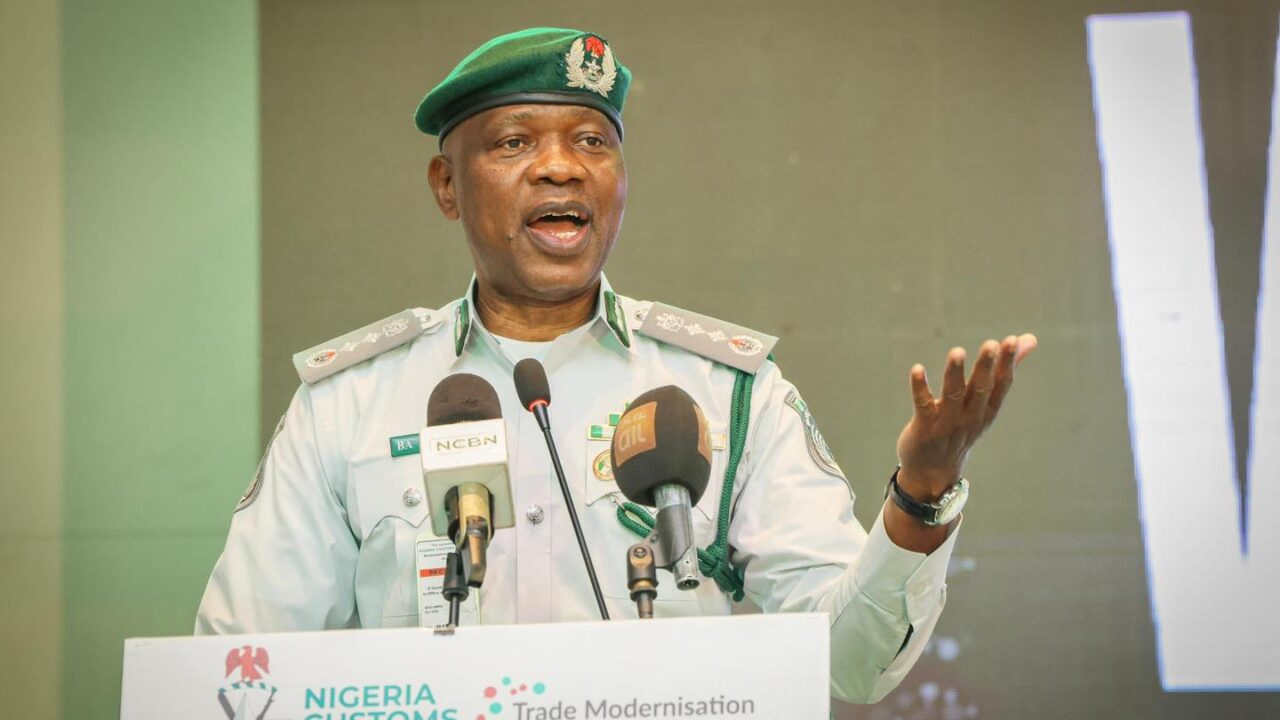
The Comptroller-General of the Nigeria Customs Service (NCS), Adewale Adeniyi, has called for stringent arms control and increased vigilance ahead of the 2027 general elections, warning that smuggled weapons could fuel criminal activities and threaten electoral security.
Adeniyi said this in Ibadan, Oyo State, on Tuesday, while speaking at the third Distinguished Personality Lecture organised by the TETFUND Centre of Excellence in Security Management, University of Ibadan.
Delivering a lecture titled “Why Customs Matters: Revenue, Security and Nationhood in a Borderless World” at Trenchard Hall, the Comptroller-General cited the seizure of 844 rifles and 112,500 rounds of ammunition at a bonded terminal in Onne, Rivers State, on June 21, 2024.
He said that the weapons were hidden among dolls, furniture and plumbing fittings in a 40-foot container from Türkiye.
He added that the Customs handed over 1,599 firearms seized between 2018 and 2024 to the National Centre for the Control of Small Arms and Light Weapons in February 2025.
The seizures, he said, demonstrated the importance of intercepting illicit weapons before they reached criminal groups, kidnapping gangs and potential trouble spots during elections.
With the 2027 polls around the corner, Adeniyi called on security agencies to strengthen intelligence gathering, data sharing and joint patrols with neighbouring countries rather than rely on border closures.
He cited the closure of Nigeria’s land borders between August 2019 and December 2020, noting that although it curbed some smuggling, field research published this year showed that it merely reorganised smuggling networks rather than dismantling them.
As the Customs chief stated, intelligence-led border management offers a more effective and sustainable approach to combating smuggling.
On revenue generation, Adeniyi said that smuggling deprived government of funds needed to provide public services, including schools, healthcare facilities and rural roads.
He described Customs revenue as important to the government’s social contract with citizens, particularly in developing economies where large informal sectors make income tax collection difficult.
Citing 2023 figures, he said that Africa’s average tax-to-GDP ratio stood at 16.1 per cent, compared with 33.9 per cent in member countries of the Organisation for Economic Co-operation and Development.
As Adeniyi pointed out, seaports, airports and border posts offered strategic points for collecting trade-related revenue. However, he warned that trade liberalisation should be carefully managed to avoid revenue losses.
He also called for closer scrutiny of import duty waivers, which he said were worth about N1.68tn in 2024, alongside a review of the waiver regime and the Customs Act.
Describing the service’s N11.07tn revenue target for 2026 as demanding, Adeniyi maintained that Customs would pursue the goal through improved compliance, data and trade facilitation rather than harassment at the ports.

He warned that meeting the target at the expense of legitimate trade would result into a false victory.
Speaking at the event, the Director of the Centre of Excellence in Security Management, Prof Benjamin Aluko, said that the lecture was designed to strengthen the centre’s mandate and promote collaboration between academia and practitioners in addressing security challenges.
He added that the event would generate evidence-based insights to support discussions on security management, peace studies and the social sciences.
The event also featured the public presentation of a 54-chapter book, Perspectives on Security Management in Nigeria, edited by Prof Isaac Albert, Aluko and retired Lt.-Gen. Tukur Buratai.