

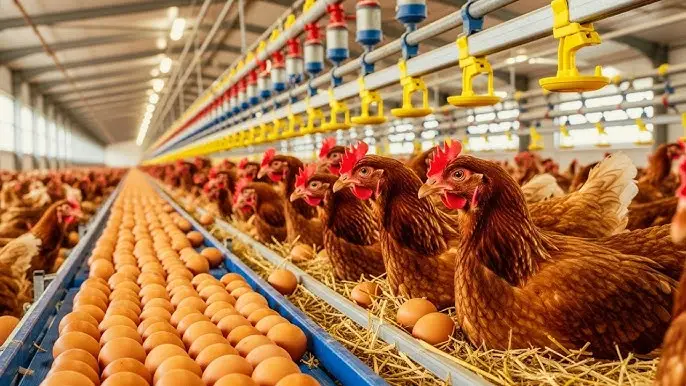
Poultry farmers have called on the federal and state governments to increase investment in the industry, provide affordable long-term financing and strengthen security around farms to improve domestic food production and safeguard agricultural investments.
The Chairman of the Poultry Association of Nigeria (PAN), Southwest Zone and National Vice-President, Southwest, Rev. Oluleye Gideon Olugbeja, made the appeal at the opening of the Nigeria Poultry Show 2026, held at the Olusegun Obasanjo Presidential Library, Abeokuta, Ogun State.
Olugbeja urged governments to involve industry stakeholders in developing policies affecting poultry production, warning that decisions taken without adequate consultation could undermine farmers’ operations and discourage investment.
He identified limited access to affordable financing as one of the major obstacles to expanding poultry businesses, noting that long-term loans would enable farmers to increase production, create jobs and contribute more effectively to national food security.
The PAN leader also called for greater attention to farm security, arguing that food production should be treated as an essential component of national security.
He expressed concern over kidnapping and other security threats that had forced some farmers to abandon their farms and agricultural investments.
According to him, the poultry industry has significant potential to support agricultural industrialisation, generate employment and improve access to animal protein if producers receive adequate government support.
The three-day exhibition, which attracted more than 100 vendors and exhibitors from Nigeria, China, India, Belgium and Germany, brought together farmers, investors, manufacturers, financial institutions and development partners to explore opportunities across the poultry value chain.
Representing the Minister of Livestock Development, Alhaji Idi Mukhtar Maiha, Mr Richard Umbara said the Federal Government was working with industry stakeholders to address challenges affecting poultry production.
He identified the shortage of day-old chicks as a major concern, explaining that some farmers waited for several months after payment before receiving supplies.
To address the problem, he said that the ministry, in collaboration with PAN, was pursuing plans to import about 60 million hatchable eggs as an immediate intervention.
The initiative is expected to reduce the waiting period for day-old chicks from approximately four months to one month, allowing farmers to plan production cycles and manage their businesses more efficiently.
Umbara also disclosed plans to introduce grandparent stock to strengthen domestic breeding capacity, with a long-term target of supporting the production of approximately 262 million day-old chicks annually.
He said that the move would reduce dependence on external breeding supplies and strengthen the country’s poultry production infrastructure.
On animal health, the minister’s representative said that government was working with veterinary professionals, farmers, hatcheries and industry associations to tackle avian influenza and other diseases affecting poultry farms.

He stressed the importance of disease surveillance, early reporting, reliable diagnosis and effective biosecurity measures, adding that vaccination and other interventions were being considered in consultation with relevant experts.
Speaking on financing, Umbara said that the Federal Government was exploring single-digit interest loans with a seven-year moratorium for businesses in the livestock sector.
He explained that proposed financing arrangements included mezzanine and blended finance, credit guarantees, insurance and risk-sharing mechanisms designed to improve access to capital and reduce lending risks.
He added that the Bank of Agriculture was undergoing recapitalisation to strengthen its capacity to finance agricultural businesses.
Meanwhile, the Chairman of the Planning Committee of the Nigeria Poultry Show 2026, Dr Olalekan Odunsi, called on participants to use the exhibition to identify investment opportunities, embrace modern technologies and develop practical solutions to industry challenges.
He said that the theme, “Building a Sustainable and Resilient Poultry Industry in Challenging Times,” reflected the need for stronger collaboration, innovation and investment to sustain the sector.
Odunsi recalled that the exhibition began more than two decades ago with modest structures made from bamboo and palm fronds at the Cultural Centre, before developing into an international platform for poultry industry stakeholders.