
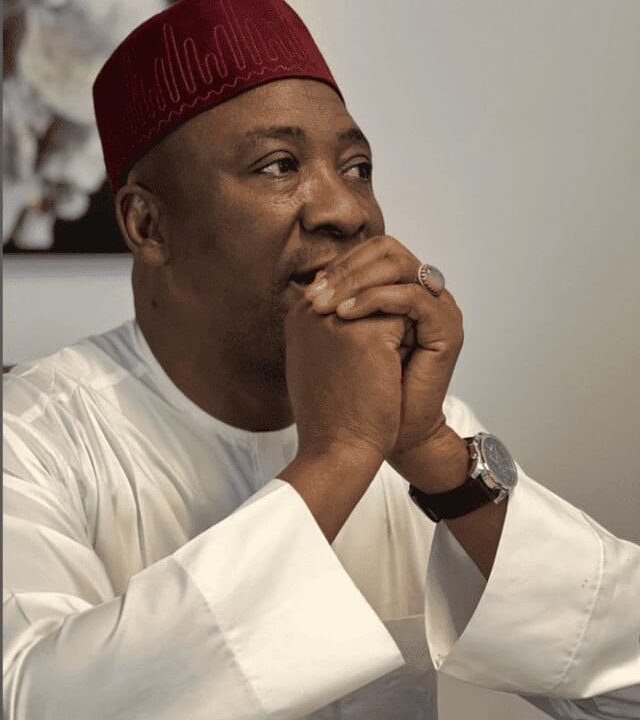
Ibrahim Musa Gusau’s nearly four-year tenure as NFF President ended amid mounting pressure over poor national team results and questions surrounding the administration of Nigerian football. This feature examines the circumstances behind his resignation, the major setbacks that defined his final months and the achievements recorded since his election in Benin City in 2022.
The curtain finally came down on Ibrahim Musa Gusau’s tenure as President of the Nigeria Football Federation (NFF) on Thursday, August 27, 2026, almost four years after he emerged from a keenly contested election in Benin City with a mandate to reposition Nigerian football.
Gusau announced his resignation at a press conference at the NFF headquarters in Abuja, with the Federation subsequently confirming that members of the Executive Committee and General Secretary, Dr Mohammed Sanusi, had also stepped down.
It was an exit shaped by contrasting chapters.
There were significant moments during Gusau’s administration: the Super Eagles reached an Africa Cup of Nations final, the Super Falcons returned to the Olympic Games after a 16-year absence, greater stability returned to the domestic league calendar, coaching education received renewed attention and football infrastructure projects were undertaken.
But the closing months were dominated by results that proved difficult for the administration to survive.
Nigeria failed to qualify for the 2026 FIFA World Cup, while the Super Falcons subsequently missed the Brazil 2027 FIFA Women’s World Cup — the first time Nigeria would be absent from the competition since its inception in 1991.
Those setbacks, combined with disappointing results at youth level and questions surrounding the administration of funds released to the Federation, produced mounting calls for changes at the Glass House.
By Thursday, Gusau had decided his time was up.
The Benin beginning
The story had started with considerable optimism on September 30, 2022.
Gusau, then Chairman of the Zamfara State Football Association and former Chairman of Chairmen of Nigerian football, arrived at the 78th NFF Elective Congress in Benin City, Edo State, as one of several candidates seeking to succeed Amaju Melvin Pinnick.
The first ballot produced no outright winner. Gusau secured 21 votes, Seyi Akinwunmi received 12 and Shehu Dikko had six. Because Gusau had not reached the required threshold, the election went into a rerun.
With Akinwunmi and Dikko withdrawing, Gusau faced former Super Eagles goalkeeper Peterside Idah in the decisive vote.
The outcome was emphatic: Gusau received 39 votes while Idah got one, handing the Zamfara-born administrator the NFF presidency.
He officially took over from Pinnick days later and became the 40th President of the Federation.
His administration spoke about football development, improving the domestic game, strengthening the national teams and restoring confidence in the system.
Almost four years later, Gusau left before the completion of the electoral process that would have determined the Federation’s next leadership.
The results that changed everything
For all the administrative arguments that can be made for Gusau’s tenure, national team results ultimately became the biggest measure by which his leadership was judged.
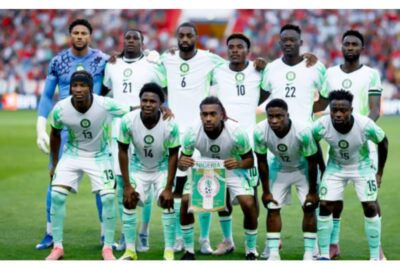
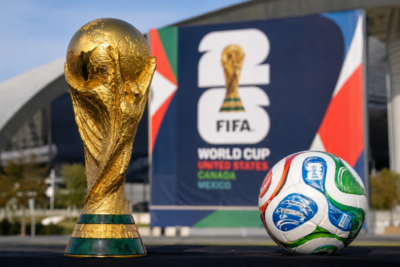
The Super Eagles’ failure to qualify for the 2026 FIFA World Cup was particularly damaging.
Nigeria had missed the 2022 World Cup before Gusau became president, making qualification for the 2026 tournament an important target for his administration.

Instead, another World Cup campaign ended in disappointment when the Super Eagles were eliminated by DR Congo on penalties in the African play-off.
The failure meant Nigeria would miss successive World Cups.
Then came another result with even greater historical significance.
The Super Falcons failed to qualify for the 2027 FIFA Women’s World Cup after losing to South Africa in the qualification play-off. Nigeria had participated in every edition of the Women’s World Cup since the inaugural tournament in 1991.
For an administration already under severe pressure over the Super Eagles, the Falcons’ elimination intensified demands for accountability.
Problems at youth level also added to the concerns, with the Golden Eaglets among the national teams unable to meet qualification expectations.
The cumulative effect was a growing perception among critics that Nigerian football needed a change in direction.
Financial questions deepen the crisis
The pressure was not limited to results on the pitch.
Questions surrounding the management of Federal Government intervention funds released to meet obligations to national teams became another major issue around the Federation.
Reports of investigations into the utilisation of public funds further increased scrutiny of the NFF leadership and added another dimension to a crisis that had initially been driven largely by football results.
It is important, however, to distinguish investigation and scrutiny from proof of wrongdoing. The existence of inquiries does not by itself establish personal culpability on the part of Gusau or any other official.
Against this background, the calls for leadership changes became increasingly difficult to ignore.
By August 27, Gusau announced his departure, saying he wanted to give other Nigerians the opportunity to contribute to the development of the game.
AFCON silver remains a major high point
Gusau’s tenure was not without important successes.
Perhaps the most memorable came at the 2023 Africa Cup of Nations, staged in Côte d’Ivoire in early 2024.
The Super Eagles reached the final, coming within one victory of winning Nigeria’s fourth African title before losing 2-1 to hosts Côte d’Ivoire.
The silver medal was Nigeria’s best AFCON finish since winning the competition in South Africa in 2013.
For Gusau’s administration, the run to the final provided one of its strongest moments and briefly restored belief that the senior national team was moving back towards the top of African football.
Super Falcons returned to the Olympics
Another major achievement came in women’s football.
The Super Falcons qualified for the Paris 2024 Olympic Games, ending Nigeria’s 16-year absence from the women’s football tournament at the Olympics.
Nigeria had not participated since Beijing 2008.
Although the Falcons were unable to progress beyond the group stage in Paris, simply returning to the competition after such a long absence represented an important achievement.
That success makes the subsequent failure to reach the 2027 Women’s World Cup even more striking — illustrating the sharp contrast between the high and low points of the Gusau era.
Domestic league stability
Away from the national teams, Gusau repeatedly identified improvements in the domestic league structure as one of the achievements of his administration.
For many years, Nigerian professional football struggled with uncertain commencement dates, prolonged seasons, fixture changes and calendars that frequently fell out of alignment with continental competitions.
During Gusau’s tenure, the Nigeria Premier Football League recorded greater scheduling stability, giving clubs a clearer idea of when seasons would begin and end.
It was not a solution to all the problems facing the domestic game — issues including club financing, facilities, attendance, television coverage and player welfare remained — but maintaining a more predictable calendar represented progress.
In his farewell assessment, Gusau pointed to this stability as part of the legacy of his administration.
Coaching education returns to the agenda
One area Gusau was particularly keen to highlight before leaving office was coaching development.
Nigeria had gone several years without some of the advanced CAF coaching courses required for local coaches seeking to improve their qualifications.
Under his administration, the NFF revived a number of coaching education programmes and secured Nigeria’s return to the CAF A-License Convention.
Earlier this year, the Federation said structured coaching and refereeing programmes were being implemented, while plans were made for the return of the CAF A-License course after a lengthy absence.
Gusau disclosed during his final address that arrangements had been concluded for the CAF A Licence programme to begin in September.
For Nigerian coaches who had sometimes been forced to travel abroad for advanced certification, the revival of such programmes represented an important administrative development.
Attempt to rebuild refereeing
Refereeing was another area where the administration attempted reforms.
Nigerian referees had endured years of limited representation at major CAF and FIFA competitions, despite the size and history of Nigerian football.
The NFF introduced development programmes for younger referees and pushed for stricter standards in domestic competitions.
There were also signs of improved continental recognition, with Nigerian officials securing assignments at CAF competitions.
Gusau consistently linked better refereeing with the credibility and commercial value of the domestic league, arguing that poor officiating could undermine attempts to attract sponsors and supporters.
Infrastructure and development
The Gusau administration also pursued infrastructure projects through FIFA-supported development programmes.
Training pitches, accommodation facilities and other projects around the Moshood Abiola National Stadium complex in Abuja formed part of the Federation’s attempt to provide permanent facilities for national teams and development programmes.
Gusau maintained before leaving office that phases of the project were progressing and that the facilities would reduce some of the logistical problems associated with preparing national teams.
Grassroots development, youth football, women’s football and greater recognition of different areas of the Nigerian football structure were also promoted as important parts of the administration’s programme.
A tenure of two contrasting halves
Ultimately, the Gusau presidency cannot be assessed solely through its final turbulent months.
There were achievements.
Nigeria reached an AFCON final. The Super Falcons returned to the Olympics. Coaching education was revived. The domestic league calendar became more predictable. Refereeing development received renewed attention, while infrastructure projects were pursued.
But football administration is inevitably judged heavily by results.
And the failures were substantial.
Missing the 2026 FIFA World Cup placed enormous pressure on the administration. Missing the 2027 Women’s World Cup after Nigeria had appeared at every previous edition made that pressure much greater.
Financial scrutiny and growing disagreement over the direction of the Federation then compounded the football problems.
Gusau eventually concluded that stepping aside was the appropriate course.
What happens after Gusau?
His resignation leaves Nigerian football at another important crossroads.
The immediate concern will be how the Federation manages the transition while respecting the NFF Statutes as well as FIFA and CAF regulations.
Before the leadership crisis reached its climax, an elective congress had been scheduled for September 27 in Lafia, Nasarawa State. The resignations now place fresh attention on the process through which a new administration will emerge since that elective Congress had now been cancelled.
The next leadership will inherit familiar problems: funding, national team performance, grassroots development, coaching standards, refereeing, infrastructure, club football, commercial growth and the need for greater public confidence in the administration of the game.
It will also inherit some structures strengthened during Gusau’s period.
That perhaps best captures the complexity of his nearly four years in office.
Ibrahim Musa Gusau entered the NFF presidency in Benin City in September 2022 after a convincing electoral victory. He leaves Abuja in August 2026 under very different circumstances, with Nigerian football searching again for direction.
Between those two moments were genuine achievements, missed opportunities and damaging failures.
His administration will be remembered for an AFCON silver medal, the Super Falcons’ return to the Olympics, attempts to stabilise domestic football and renewed investment in coaching and refereeing development.
It will equally be remembered for the Super Eagles missing the 2026 World Cup, the historic failure of the Super Falcons to reach the 2027 Women’s World Cup and the administrative crisis that ultimately preceded his resignation.