
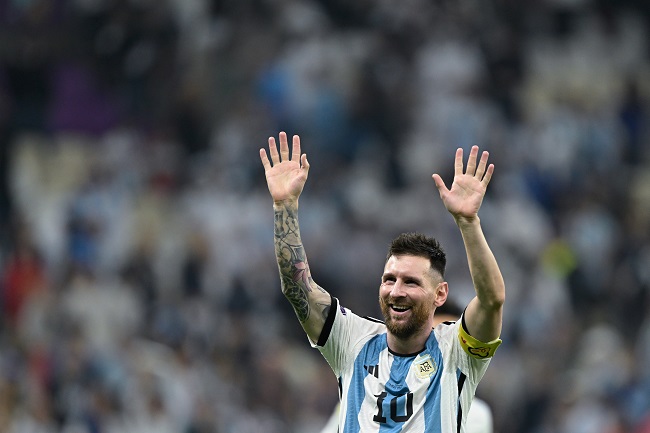
Lionel Messi has finally brought down the curtain on an extraordinary international career that began with a red card, endured years of painful near-misses and eventually delivered virtually everything he had dreamed of winning with Argentina.
At 39, and 21 years after making his senior debut, Messi announced his retirement from international football on Monday, August 31, leaving behind numbers, trophies and memories that may prove difficult for another Argentine footballer to match.
His last appearance came in the 2026 FIFA World Cup final on July 19, when Argentina’s attempt to retain the trophy ended in a 1-0 extra-time defeat to Spain.
It was not the farewell Messi would have wanted, but his international story had already acquired the ending that once appeared destined to elude him.
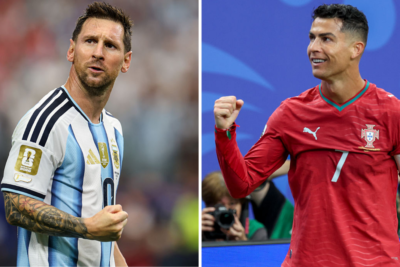
Messi leaves as Argentina’s most-capped player and record goalscorer, with 125 goals in 207 appearances. More importantly, he leaves having transformed his relationship with the national team from one defined by repeated disappointment into an era of sustained success.
A difficult beginning
Messi’s Argentina career began in Budapest on August 17, 2005.
The 18-year-old entered as a substitute against Hungary and was sent off less than a minute later following an altercation with Vilmos Vanczak.
Few could have imagined that the teenager walking off the pitch that evening would eventually become the most influential player of his generation and the statistical benchmark for Argentina’s national team.
His talent was never seriously questioned. His ability to reproduce Barcelona’s success with Argentina, however, became one of football’s most persistent debates.
The comparisons with Diego Maradona were inevitable.
Messi could win almost everything with Barcelona, score at an extraordinary rate and collect individual honours, but for years a senior international trophy remained missing.
Argentina reached the 2014 World Cup final in Brazil, only to lose 1-0 to Germany after extra time.
There were further painful defeats in the Copa America finals against Chile in 2015 and 2016. The latter proved particularly damaging.
After missing in the penalty shootout as Argentina suffered another defeat, an emotional Messi announced his retirement from international football.
“The national team is over for me,” was effectively his conclusion.
Thankfully for Argentina, it wasn’t.
Messi reversed the decision and returned. That comeback ultimately changed how his international career would be remembered.
The night everything changed
For years, Messi’s critics pointed to the absence of a major senior international trophy. That argument effectively disappeared at the Maracana on July 10, 2021.
Argentina defeated Brazil 1-0 in the Copa America final through Angel Di Maria’s goal.
Messi was finally a senior international champion.
The images after the final were telling. Rather than Messi standing alone as the superstar expected to carry Argentina, his teammates surrounded and lifted their captain.
It represented the emergence of a different Argentina under Lionel Scaloni — a team built around Messi but not entirely dependent on him.
The trophies then began to arrive.
Argentina defeated European champions Italy 3-0 at Wembley to win the 2022 Finalissima.
Then came Qatar.
Qatar completed the story
If one tournament changed Messi’s place in Argentina’s football history, it was the 2022 World Cup.
Argentina’s campaign started disastrously with a shock defeat to Saudi Arabia. Messi and his teammates responded by winning the tournament.
He scored seven goals and supplied three assists, including two goals in an unforgettable final against France.
After a 3-3 draw, Argentina won the penalty shootout and Messi finally lifted the World Cup.
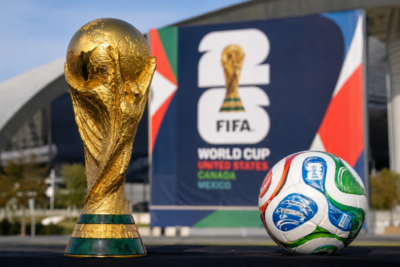
It was Argentina’s first world title since Maradona inspired the country to victory in Mexico in 1986.
Messi was awarded the Golden Ball as the tournament’s outstanding player, becoming the first footballer to win the World Cup Golden Ball twice after also receiving the award in 2014.
The debate about what was missing from his international career was effectively finished.
Two years later, Argentina defeated Colombia to retain the Copa America in 2024, giving Messi another major trophy.
By then his international honours at senior level included the 2022 World Cup, Copa America titles in 2021 and 2024 and the 2022 Finalissima. His wider Argentina career also included the 2005 FIFA World Youth Championship and Olympic gold at Beijing 2008.
One final World Cup
Messi could easily have stopped after Qatar or the 2024 Copa America.
Instead, he continued.
At 39, he returned for a sixth World Cup in the United States, Canada and Mexico and demonstrated that age had diminished his physical powers without completely removing his ability to influence matches.
Messi finished the 2026 tournament with eight goals and four assists as defending champions Argentina reached another final.
Spain ultimately prevented a second consecutive world title, Ferran Torres scoring the extra-time goal in a 1-0 victory.
Messi therefore leaves having played in three World Cup finals — 2014, 2022 and 2026 — winning one and finishing runner-up twice.
His 21 World Cup goals place him second on the competition’s all-time scoring list behind France’s Kylian Mbappe, while he finished his international career with 125 goals.
Records, trophies and individual honours
Numbers alone cannot fully explain Messi’s influence, but his collection of records provides some indication of his longevity.
His 207 appearances and 125 goals are both Argentina records.
He became the first South American men’s player to reach 100 international goals and established 4
He also holds the Copa America appearance record, having played 39 matches by the end of the 2024 tournament.
His individual honours extend far beyond international football.
Messi has won a record eight Ballon d’Or awards, more than any player in history. He twice won the FIFA World Cup Golden Ball, was named the best player at the 2005 FIFA World Youth Championship and won the Golden Boot at that tournament with six goals.
His 2022 World Cup performance was particularly historic. He scored in the group stage, round of 16, quarter-final, semi-final and final, becoming the first player to score at every knockout stage of a single World Cup.
His career achievements also include four UEFA Champions League titles and 10 La Liga championships with Barcelona, alongside numerous domestic and international honours.
For all the club trophies and Ballon d’Or awards, however, lifting the World Cup in Lusail remains perhaps the defining image of his career.
More than numbers
Messi’s greatest impact on Argentina cannot simply be measured in goals.
His international career was effectively divided into two periods.
For much of the first, he was the superstar constantly compared with Maradona and blamed whenever Argentina failed to win.
He lost the 2007 Copa America final, the 2014 World Cup final and the Copa America finals of 2015 and 2016.
For a player accustomed to winning almost everything with Barcelona, Argentina became the source of some of his deepest football disappointments.
Then came the transformation.
Between 2021 and 2024, Argentina won four major senior international trophies — two Copa Americas, the Finalissima and the World Cup.
Messi went from being accused of failing to reproduce his club form for Argentina to captaining one of the country’s most successful generations.
That perseverance may ultimately be as important to his legacy as his goals.
He failed, returned, failed again and kept returning until Argentina finally became champions.
An emotional farewell
There was another, much more personal element behind Messi’s decision.
His father, Jorge Messi, died on August 8 at the age of 68 following a long illness.
Jorge had been one of the most important figures in his son’s career, overseeing much of his professional affairs and accompanying the journey from Rosario to Barcelona and eventually to the summit of world football.
Messi revealed that he had actually written his retirement message on July 21, two days after the World Cup final, but said his father’s death strengthened his conviction that the moment had arrived.
“It was a decision that hurt — and still hurts deep down — but I understand that the time has come,” Messi said.
He explained that he had given everything he could to Argentina and acknowledged that another generation now deserved its opportunity.
“I’ve given everything I had; I have nothing left to give,” he wrote, adding that there were young players ready to take their places in the national team.
It is an important detail because Messi spent so much of his career refusing to surrender to disappointment.
This time he leaves voluntarily, not in the emotional aftermath of a Copa America defeat as he did in 2016, but with the satisfaction of knowing that the biggest objective was eventually achieved.
From Rosario to immortality
Argentina has produced some of football’s greatest players — Alfredo Di Stefano, Mario Kempes, Daniel Passarella, Gabriel Batistuta and, above all, Maradona.
Messi belongs in that company and, statistically, stands above them in several categories.
For years, the question was whether he could ever occupy the same emotional space as Maradona in Argentina.
Qatar changed much of that conversation.
Messi did not need to become Maradona. He created his own story.
He was the diminutive boy from Rosario who left home for Barcelona, became one of football’s greatest players and spent years chasing the one trophy his country desperately wanted him to win.
When it finally came, Messi was 35.
He continued for another four years, taking Argentina back to a World Cup final at 39 before accepting that his international journey had reached its conclusion.
Club football will continue with Inter Miami, where his contract runs until the end of the 2028 season.
But there will be no more number 10 shirt for Messi with Argentina.
No more World Cup nights carrying the hopes of millions. No more Copa America campaigns. No more debate about whether he can win something with his country.
That question was answered emphatically.
After 207 appearances, 125 goals, six World Cups, three World Cup finals and a collection of international trophies spanning more than two decades, Messi leaves Argentina not merely as a record holder.
He leaves as a world champion and as the central figure in one of the greatest individual journeys international football has witnessed.