

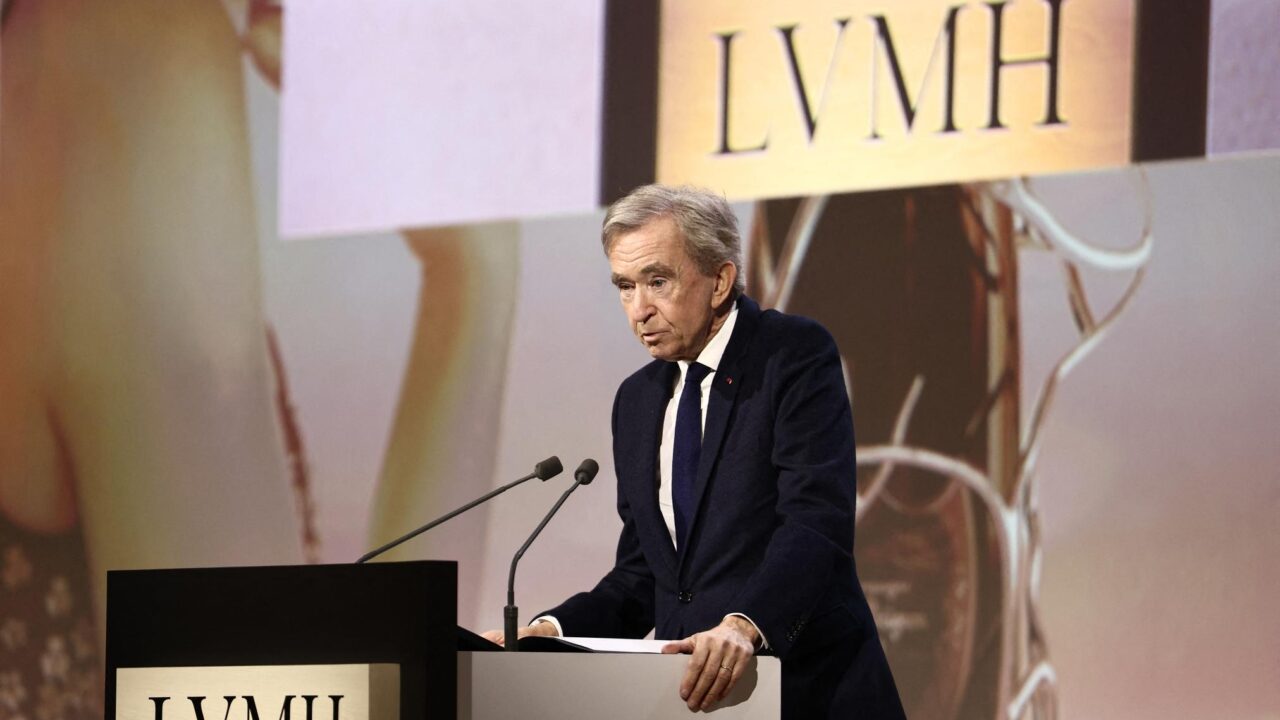
The world’s biggest luxury fashion group, LVMH Moët Hennessy Louis Vuitton, is discovering that even the strongest brand names are not immune to a changing market.
This is particularly so as weakening Chinese consumer confidence threatens hopes of a recovery in the global luxury industry.
The French luxury conglomerate, whose portfolio includes Louis Vuitton, Dior, Bulgari, Tiffany and Sephora, reported third-quarter organic revenue growth of one per cent to €18.5 billion, below analysts’ expectations of 1.3 per cent.
Its fashion and leather goods division, which accounts for nearly half of group revenue, suffered a five per cent decline, highlighting the pressure on its flagship businesses.
The low performance came despite a five per cent increase in US sales, as revenue in Asia, dominated by China, fell five per cent compared with what it was last year.
LVMH’s watches and jewellery division also lost momentum, with growth slowing to six per cent from nine per cent in the first half of the year.
The figures tend to reinforce concerns that the global luxury market, estimated at $350 billion, is struggling to emerge from a prolonged slowdown.

Chinese consumers, who account for about a fifth of global luxury purchases, have historically been a major source of growth.
However, declining consumer sentiment and a tax crackdown on wealthy individuals are weighing on discretionary spending.
For Louis Vuitton and Dior, the challenge is not just about the economic conditions. It is more of luxury brands being able to persuade consumers that their products justify increasingly selective spending, even when prestige and exclusivity remain central to their appeal.
LVMH’s US-listed shares fell more than three per cent following the results, while the group has lost about 40 per cent of its market value since the beginning of the year, suggesting growing investor anxiety about the sector’s recovery.
Meanwhile, the company’s Chief Financial Officer, Cécile Cabanis, who acknowledged the decline in Chinese consumer sentiment, has ruled out drastic measures such as price cuts to revive Louis Vuitton, arguing instead, for a better balance between innovation and heritage.
The group’s wider performance offered some relief, though.
Selective retailing, which includes beauty retailer Sephora, recorded eight per cent organic revenue growth, while LVMH maintained that revenue for the first nine months of 2026 reached €57.1 billion, with organic growth of two per cent.
That notwithstanding, the contrasting performances reveal the uneven nature of the recovery.
While some segments remain resilient, the weakness in fashion and leather goods shows that even established luxury houses cannot depend indefinitely on brand prestige and premium pricing to sustain growth.
For fashion entrepreneurs, particularly emerging African designers seeking international recognition, LVMH’s struggles could be a scenario to learn from.
The lesson could be the fact that though a popular brand may attract customers, sustaining a long-term success could be a function of understanding changing consumer priorities, continuously renewing creative appeal and building a loyal customer base across markets.