
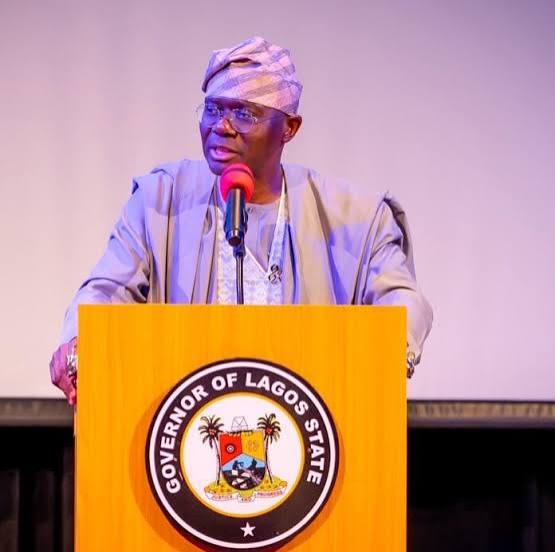
The Lagos State Government has commenced enforcement of its mandatory health insurance scheme, directing residents to obtain coverage by December 31, 2026, ahead of full implementation on January 1, 2027.
Governor Babajide Sanwo-Olu announced this on Tuesday at a ceremony in Victoria Island, saying the policy was designed to expand access to healthcare and protect households from the financial burden of medical expenses.
The initiative, implemented under Executive Order EO/BOS/01 of 2024, is part of the efforts of state to reduce reliance on out-of-pocket payments for medical services.
Sanwo-Olu said the policy was introduced to enable residents to access quality healthcare without financial hardship, stressing that individuals, employers, workers and the State Government must all play their roles to ensure the effective implementation of the scheme.
The governor, who described healthcare coverage as an essential employment obligation similar to pension contributions, urged employers to prioritise workers’ health insurance.
He also cautioned healthcare providers against denying patients emergency treatment for lack of insurance cover or inability to pay upfront, stressing that patients must be stabilised first before issues of payment and insurance are addressed.
The mandatory insurance policy will operate alongside the existing Ilera Eko scheme, which provides coverage for vulnerable residents and those in the informal sector.
Speaking at the event, the state Commissioner for Health, Prof. Akin Abayomi, said that the rising healthcare expenses had made health insurance important.
He linked the increase in the cost of healthcare services to advances in medical technology, including artificial intelligence, robotics and modern diagnostic equipment.
According to him, an inclusive health insurance system would help protect residents from escalating medical bills while improving access to quality treatment.
The commissioner noted that Nigeria’s heavy dependence on direct payments for healthcare placed enormous financial burden on households and healthcare facilities, making a shift towards insurance-based financing necessary.
Earlier, the Chairman of the Lagos State Health Management Agency, Dr Adebayo Adedewe, disclosed that the state government had increased its Health Equity Fund from ₦1 billion to ₦3 billion.
He said that the increased funding was intended to extend health insurance coverage to more than 500,000 vulnerable residents, who could not afford the required premiums.
Adedewe added that the agency would intensify enrolment efforts, public awareness campaigns and community engagement to ensure that more residents understood the policy and could access its benefits.
According to him, LASHMA had strengthened its grassroots outreach through radio campaigns, billboards, digital advocacy and partnerships with traditional rulers, market associations, transport unions and other community organisations.

The state government is banking on mandatory health insurance to broaden healthcare access, reduce the financial risks associated with illness and strengthen the sustainability of healthcare delivery.
With full enforcement scheduled forJanuary 1, 2027, residents and employers are expected to use the December 31 deadline to secure the necessary coverage.