

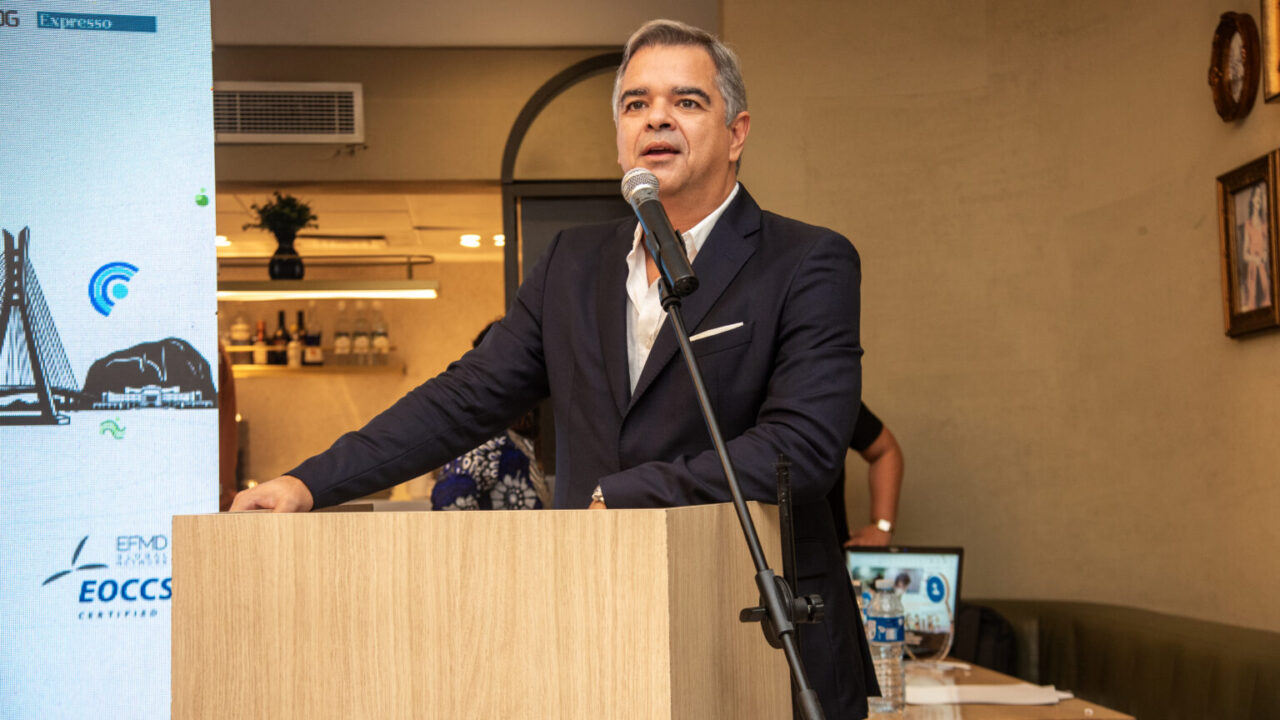
China has emerged winner of the Global Management Challenge (GMC) international final in Lagos, as Nigeria hosted the global business simulation competition for the first time.
The competition, held from November 11 to 13, brought together students and business professionals from six countries to test their strategic thinking, leadership and business management skills through a virtual company simulation.
China clinched the first position, followed by Nepal in second place and Russia in third.
India, Spain and Portugal finished fourth, fifth and sixth respectively.
The event marked the second time the international final had been hosted in Africa, following Angola’s hosting of the competition in 2023.
Managing Director of Simuladores e Modelos de Gestão (SDG), the Portuguese company responsible for organising the competition globally, João Matoso Henriques, said the initiative bridges the gap between academic knowledge and practical business management.
Describing the GMC as the world’s largest strategy and management competition based on simulation, Henriques said it provides participants with an opportunity to experience the complexities of running a business.
Under the competition’s format, participating teams take charge of virtual companies and make critical decisions covering marketing, human resources, production and finance.

Their choices determine the performance of their businesses in a competitive simulated market.
Henriques said the exercise also promotes financial literacy and provides opportunities for participants to establish professional relationships with people from different countries.
Nigeria’s partner in the competition, Ryan Fayad, said the initiative was particularly important for a country with a large youth population, describing it as an effective platform for developing practical skills among students and professionals.
“Nigeria has a very young population, and this is a very effective tool for skills development for students and professionals,” he said.
Fayad disclosed that since the programme was introduced in Nigeria in 2019, it had successfully organised four national editions, helping to identify and develop young talents across different professional and academic backgrounds.
He said the next phase would focus on increasing corporate participation and strengthening collaboration between educational institutions and industry players.
According to him, the initiative aims to create stronger links between students and professionals, improve access to workplace opportunities and establish clearer pathways from education to employment.
He also commended Nigeria’s representatives, Team Apex, for their performance, noting that the undergraduates competed against participants that included professors, postgraduate students and senior business executives.
Team Apex comprised Ayodeji Fadunmoye, Oluwasolafunmi Adesina and David Odukoya.
The team qualified for the international final after competing against more than 65 teams during the national rounds.
Speaking at the event, Fadunmoye said the competition offered the team valuable exposure and an opportunity to acquire practical experience relevant to their future careers.
“We are just young adults looking for practical exposure to opportunities, gaining hands-on experience and what it means to create and have a great career,” he said.
Although the Nigerian team did not secure a podium finish, Fadunmoye described representing the country at the international competition as a rewarding experience.
“We didn’t win, but it was a great experience to be here, representing the country and making ourselves proud,” he added.
Former Chairman of Fidelity Bank’s board of directors and pioneer Managing Director of the Asset Management Corporation of Nigeria, Mustafa Chike-Obi, called for increased investment in practical management and leadership development.
He said Nigerian institutions and businesses needed to place greater emphasis on equipping young people with the skills required to manage organisations and make sound business decisions.
“Sometimes we are in too much of a hurry to do things.
This is a good first step. Nigerians need more management and leadership skills,” he said.
Chike-Obi urged universities, businesses and individuals to support initiatives that promote practical learning, adding that experienced professionals should also take responsibility for mentoring younger people.
“Any young person who wants me to mentor them, I’m available,” he said.
Also speaking, Kaushal Prasad, a member of India’s NDBC Limited team, said his team reached the international final after competing against nearly 1,300 teams in its national competition.
He described the simulation as a valuable learning experience because it allowed participants to experiment with business strategies, make mistakes and improve their decisions without risking an actual business.
“GMC basically gives us an opportunity to apply all our learnings into a simulation game where we can make mistakes and learn from it.
In a real-life environment, it’s like do or die.
But in GMC, we get another chance to do things differently and learn from our mistakes,” he said.
The Global Management Challenge uses business simulation to expose participants to real-world management situations, testing their ability to make strategic decisions, manage resources and compete in changing market conditions.