
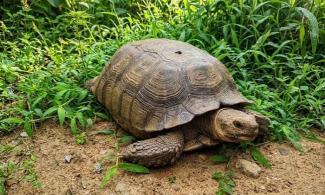
A 420-year-old tortoise popularly known as Baba, and one of the most enduring symbols of history and tradition in the ancient Oyo Kingdom, has died at the palace of Alaafin of Oyo.
Baba, widely believed by residents as the oldest indigene of Oyo, reportedly died on Monday after falling ill and was later buried.
The death of the treasured animal brought an end to what the palace described as a centuries-old presence that had survived through the reigns of successive Alaafins.
The Director of Media and Publicity to the Alaafin, Bode Durojaiye, confirmed the death of the royal tortoise in a statement made available to reporters on Thursday.
Durojaiye said Baba was more than a tortoise to the palace, describing the animal as part of the oral history and cultural heritage of the Yoruba people.
“Baba was more than a tortoise in status. He represented a part of the oral history of the Yoruba race. Now, the Alaafin has lost an ageless companion,” he said.
According to the palace, oral history traced Baba’s origin to Oyo-Ile, the ancient capital of the Oyo Empire, from where it was reportedly brought to the present palace in Oyo town.
Over the years, Baba became a familiar attraction at the palace, drawing visitors who came to see the tortoise because of its reported age and size.
The palace said two officials were responsible for caring for Baba, which was fed with watermelon, corn pap wrapped in leaves and grass.
It said Baba fell ill on Monday and stopped eating before its death.
The palace statement described Baba as a longstanding companion of successive Alaafins, saying each monarch inherited the tortoise as part of the relics associated with the ancient kingdom.
“No one could call him by his name, so Baba was adopted, indicating that it was a male. He drew his own crowd. Strong and friendly, Baba was the reason many people trooped to the ancient palace in its days,” the statement said.
“In Oyo, Baba was regarded as the oldest indigene. It was the Paramount Ruler’s most cherished pet. The monarch met it in the palace. Baba was nourished by a succession of kings, who inherited him as part of the relics of their ancestors.”
The palace also linked Baba’s symbolic place in Oyo history to Yoruba beliefs about the relationship between the living, the dead and the unborn, referencing Wole Soyinka’s play, Death and the King’s Horseman.
It described Baba as a symbol of the palace’s oral tradition and said his death represented the loss of a longstanding companion and an attraction that had drawn visitors to the historic palace.

The statement said, “Baba fell ill on Monday, just a little sickness and couldn’t eat anymore. Then, he died. Just like that.
“He had since been buried. Good night, Baba.”