
The National Union of Textile, Garment and Tailoring Workers of Nigeria (NUTGTWN) has challenged political parties and their candidates to account for the country’s declining industrial fortunes, demanding concrete plans to revive local manufacturing and address worsening workers’ welfare ahead of the 2027 general elections.
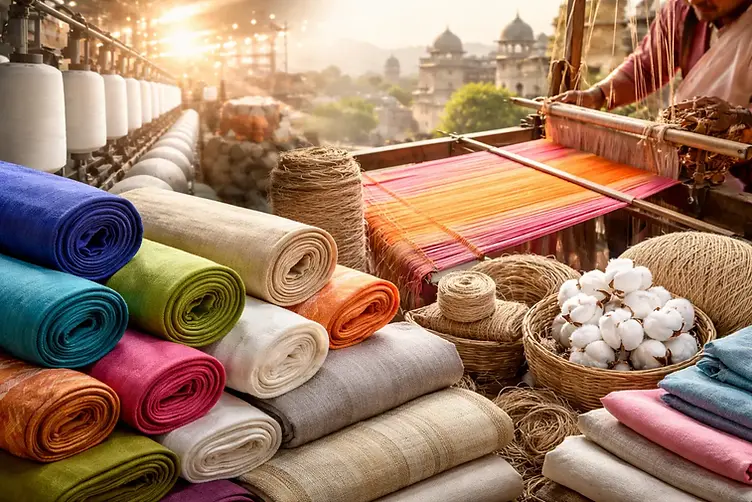
The union said successive governments had failed to adequately address the challenges confronting Nigeria’s industrial sector, particularly the textile and garment industry, resulting in factory closures, massive job losses, declining investments and deteriorating living conditions for workers.
Speaking at the opening of the union’s 38th Education Conference in Osun State, held from November 19 – 20, President of NUTGTWN, Peters Godonu, described the state of the country’s industrial sector as a major national concern, insisting that industrial revival must become a central issue in political campaigns ahead of the next general elections.
Godonu said the consequences of industrial decline extended beyond factory closures, affecting workers, business owners, communities and thousands of self-employed tailors and garment producers struggling to remain in business.
He identified limited access to finance, modern equipment, affordable raw materials and organised markets as some of the major constraints facing small-scale garment operators and other players in the industry.
According to him, the worsening situation makes industrial revitalisation an urgent national priority, requiring deliberate policies that encourage productive investment, strengthen local enterprises and create sustainable employment.
The labour leader also called for stronger collaboration among government, employers and organised labour, arguing that democratic governance must translate into measurable improvements in citizens’ living and working conditions.
He maintained that Nigeria could not achieve sustainable economic development without a strong industrial base capable of generating productive employment, protecting workers’ rights and distributing the benefits of economic growth more equitably.
With the 2027 elections approaching, Godonu urged political parties and aspirants to move beyond campaign promises and demonstrate measurable commitments to rebuilding the country’s productive capacity.
He said voters should scrutinise the performance of political officeholders, particularly their contributions to industrial development, job creation, workers’ welfare and the protection of local businesses.
The union president stressed that candidates seeking public office must present clear policy proposals on how they intend to strengthen domestic industries and create an enabling environment for businesses to thrive.
He noted that a strong industrial base was essential to democratic stability, just as accountable democratic institutions were necessary for sustainable industrial development.
Godonu expressed hope that the conference would provide an opportunity for workers, employers, trade unions and other stakeholders to examine the relationship between democratic governance and economic development, while developing practical recommendations for industrialisation, decent work and social dialogue.
The conference also provided an opportunity for the union to commemorate the 2026 Africa Industrialisation Day, observed annually on November 20 following its declaration by the African Union and the United Nations General Assembly.
Godonu recalled that the day was first observed in 1990, adding that NUTGTWN had consistently marked the occasion since 2012 through policy discussions and stakeholder engagements focused on industrial development and sustainable economic growth.
He acknowledged the support of Friedrich Ebert Stiftung (FES), whose partnership has facilitated the union’s annual policy roundtables, bringing together government institutions, employers, organised labour and development partners to examine Nigeria’s industrial challenges and recommend policy interventions.