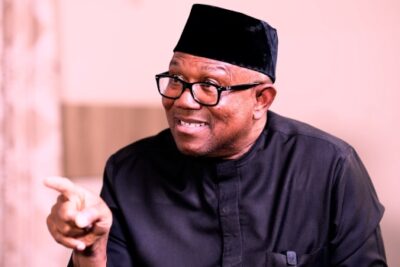


The Nigeria Democratic Congress (NDC) presidential candidate and former Anambra State Governor, Peter Obi, has promised to restore the petrol subsidy if elected president of the country in 2027.
Obi, who reversed the impression created by earlier comments that his administration would only seek to reform the scheme, pledged to return subsidy regime and tackle the corruption associated with the policy in the past.
He made the promise on Tuesday during an interview with the BBC, where he argued that the major problem with the subsidy regime was the corruption surrounding its implementation.
In his 2023 presidential campaign, Obi vowed to remove the fuel subsidy, stating that the funds should instead be redirected toward critical national development sectors like education, health, and infrastructure.
His sudden U-turn also came about two weeks after his running mate and former Kano State Governor, Dr Rabiu Kwankwaso, backed the idea of reintroducing subsidy in a different form if the opposition party wins the 2027 presidential election.
Speaking on his position on the subsidy regime, Obi said, “From day one, I’ve talked about subsidy. I talked about corruption; corruption is the problem of subsidy.”
Asked specifically whether he would bring back the subsidy regime if elected, the NDC candidate answered in the affirmative but said his administration would first eliminate the corruption associated with the policy.
“Yes. But remember, I have qualified it, not with the corruption that’s associated with it. I’ll remove the corruption and retain the subsidy.”
Obi also explained how he intended to tackle corruption in government, arguing that the conduct of the President and members of his immediate family would be central to his anti-corruption strategy.
“If you are not stealing, if you are not involved, your wife and family are not involved, you reduce it by 50 per cent,” the presidential candidate said.
Obi also rejected suggestions that he should step down for another opposition candidate if the parties eventually agree to field a consensus presidential candidate in 2027.
Rather than stepping down, Obi said the opposition should focus on doing what is necessary to win the election.
“We don’t need to step down. We need to do the right thing.”
The NDC candidate was also asked about the anti-corruption record of former President Muhammadu Buhari, who similarly campaigned on an anti-corruption platform and made efforts to keep members of his family away from government-related matters.
“Nigerians should not decide with that,” Obi stated, adding, “He was not in charge. The difference is that I’ll be in charge.”

Obi’s comment came in the context of discussions about corruption allegations involving some officials who served under the Buhari administration and who have been investigated by the Economic and Financial Crimes Commission (EFCC).
With the 2027 election approaching, the petrol subsidy debate is expected to remain a major campaign issue, particularly as opposition parties seek to present alternatives to the economic policies of the Tinubu administration.
While the Federal Government has defended subsidy removal as a necessary reform, opposition politicians have continued to debate whether the policy should be reversed, modified or replaced with measures that would reduce the cost of petrol through increased domestic refining and production.